
Foreword#
I dedicate these few pages to my wife who, despite her young age,
at the risk of her life, took part in the resistance by accompanying me during the execution of acts of sabotage while our homeland was occupied by the Nazi hordes.
I also dedicate this account to Colonel J. VAN RUYCHEVELT, whose father died in a concentration camp. He understands better than anyone what life was like for concentration camp inmates — slave labor under the rule of the SS and Gestapo.
Lacking any literary talent, I will strive for precision, sincerity, and impartiality in my description, without omitting details, so as to leave a testimony of what I saw and experienced in the Flossenbürg camp.
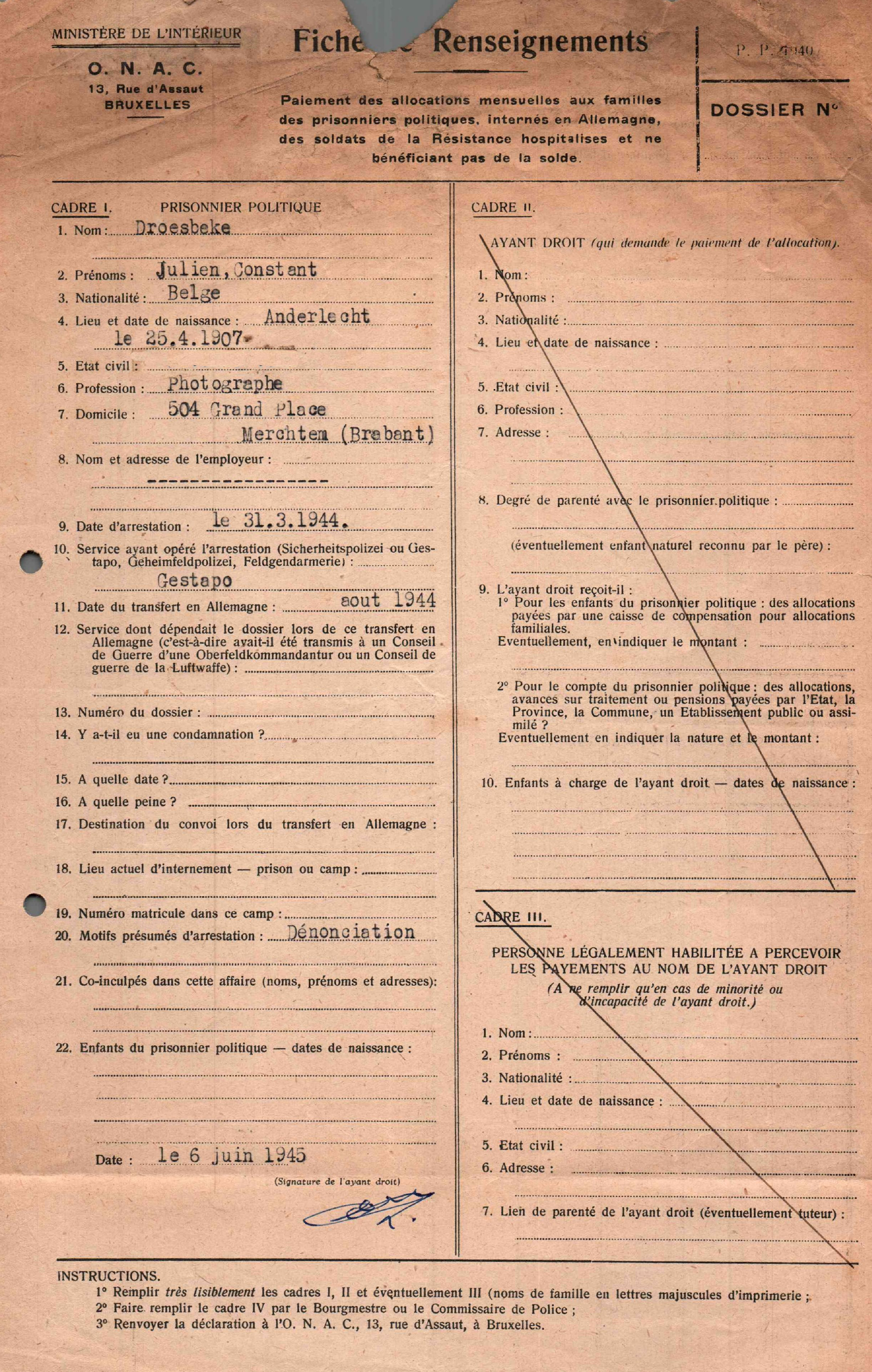
FLOSSENBÜRG#
This death camp was located in the Bavarian Upper Palatinate, 5 km from the Czechoslovak border. An isolated and very well camouflaged place.
Nearly 111,400 people, including 95,400 men and 16,000 women, were detained there between 1938 and 1945.
Approximately 74,000 people died there, including 4,771 French and 1,693 Belgians.
This is the grim toll of this Nazi camp, a detailed description of which will follow.
At a time when racism and anti-Semitism are re-emerging throughout the world, when blind terrorist violence defies reason; at a time when people are imprisoned and tortured for opinion crimes, speaking of this sad past may seem useless, a sterile evocation of painful memories.
But so that genocide and the deportation of entire populations are not drowned and forgotten in time, it is necessary that men remember, that others question the guardians of this collective and individual memory, to render justice to the victims.
When one has not lived the facts, curiosity and the thirst for knowledge allow one to question former deportees, to better understand the different motives that led them on this march toward memory.
One can best discover, through the words of those who lived it, the hallucinatory reality of a methodical, industrialized system of extermination.
Then the names, until now unknown or ignored, resonate: SVATAVA – ZWICKAU – TEREZIN – LITOMERICE – HRADISCO – JANOVICE – HOLYSOV – FLOSSENBÜRG – and so many other places that Nazi barbarity turned into hells.
As a witness who lived through this drama, I can, in simple sentences, tell you the dimension of the horror and teach you more about the concentration camp world than the most complete thesis ever could. Make you understand not only with the mind, but with the heart.
Through the evocation of the abuses I endured there, some will at times rediscover the accents of fear, the faces of martyrs whose eyes, dead to hope, launched a heartrending appeal to those who crossed their path.
The number B 39.888, which I wore on my convict’s uniform and which I have piously kept as a relic, speaks of all the suffering endured during my sad captivity.
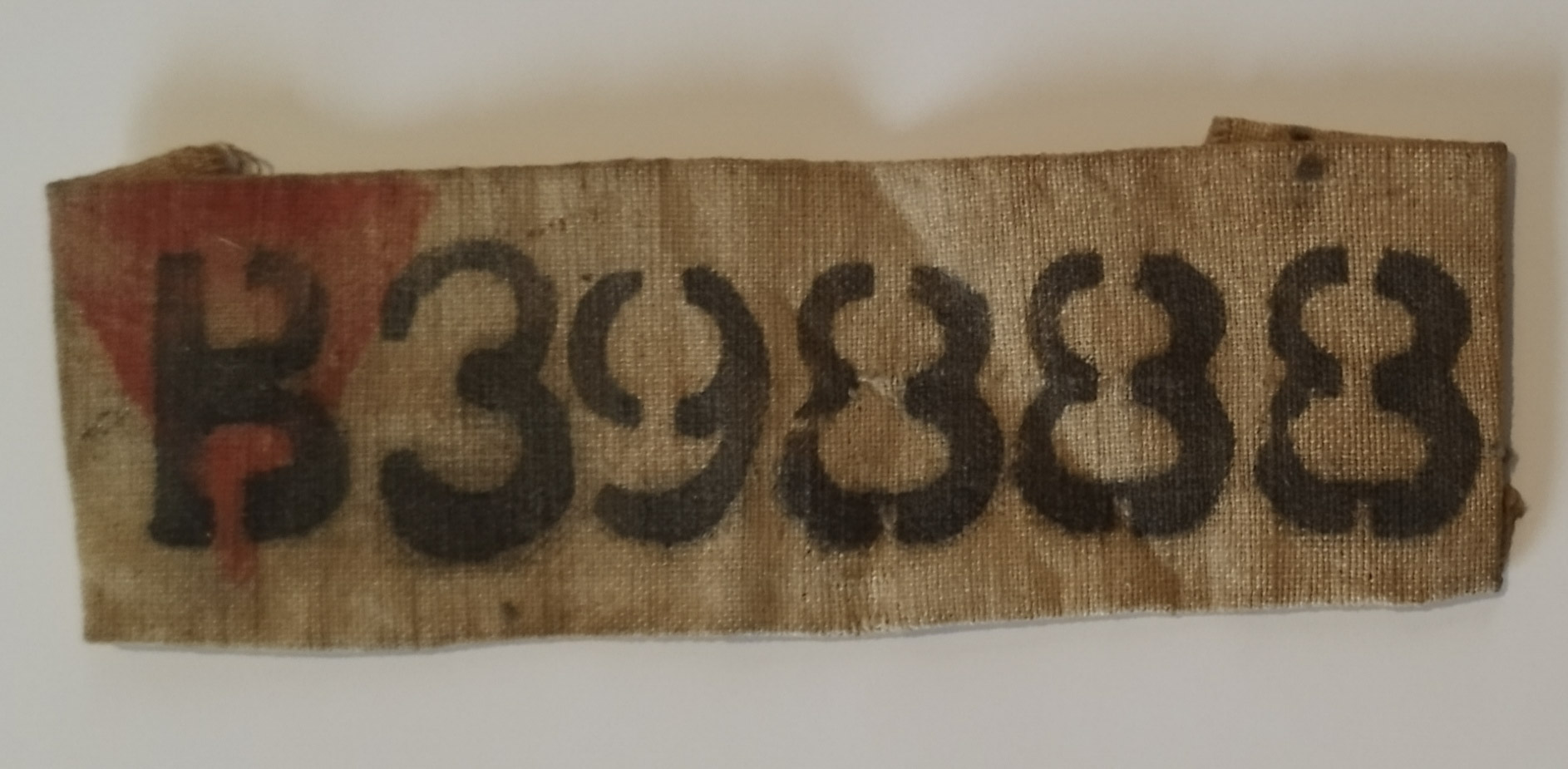
This “rag” bears witness to a past I can never forget, to the will to remember my fellow prisoners who did not have the chance to return from this hell.
I allow myself to draw your attention to the heartrending cries of the thousands of brothers and sisters killed in the camps, of those who implored me, before dying, to tell you what fanatical, disoriented beings were capable of and what a dictatorship can lead to!
The recounting of their nightmares, of the sufferings they evoke and those one can guess, becomes an act of accusation — not only against monstrosity, but against any stubbornness to destroy human dignity.
They recall without hatred; they have known for 45 years, in body and heart, everything that hatred can annihilate; that reason is not always enough to protect against it.
When I describe this hell, one can only try to imagine the existence I led there during those long months.
He who did not share our fate can grasp only an infinitesimal part of what our ordeal was. For me, the shadows remain so present that one would think one hears the dry crack of a firing squad’s weapons, the heartrending call to life behind the barbed wire from all those commandos, inviting reflection on justice and tolerance.
Between the sordidness and the greatness of those who gave their lives in the struggle against arbitrariness, the choice is made.
Stopping at these sufferings, retaining from deportation only this enterprise of dehumanization would, in my opinion, make the executioners triumph and betray our dead. Some lacked the strength or support needed to escape “the daily death of the camps”; others yielded to the temptation to enslave their fellow captives in turn. But many tried, to the extent of their means, to make humanity and solidarity triumph.
We, the survivors, must teach younger generations that, in the face of ideology and violence, the last word must belong to spiritual forces — where the will to live, the desire to affirm one’s dignity, and the hope of rebirth in the memory of men are concentrated.
Between the past of our memories and the future of our hopes lies the present, which it is up to us to shape, by watching over the development and respect of man, drawing on the lessons of history. A people that forgets its past is condemned to relive it.
16 DECEMBER 1944#
For disobedience to the enemy, a group of 95 prisoners is sent to Flossenbürg camp.
We climb — under the jeers of the German inhabitants, on foot and handcuffed — an extremely steep slope about 1.5 km long through the village of Flossenbürg, from the station to the camp entrance.
The inhabitants, adults and children, stood on their doorsteps or at windows, clearly happy to see us in this state.
Yet behind some windows one could see people with an almost compassionate expression. Doubtless the defeat at Stalingrad and the retreat of German units to prepared positions on the front were beginning to have an effect. Others displayed mocking smiles.
At the exit of the village, on the left I discovered the ruins of an old feudal fortress, of grim appearance, built on a mountain.
This stone armor, still imposing in its style, dominated the surrounding mountains.
I saw numerous barracks of various kinds, recent stone buildings in Bavarian style.
I also noticed that through considerable earthworks, a kind of immense platform had been built over the valley, connecting the flanks of two facing mountains.
It was on this site and these hilly slopes — at 1,100 meters altitude — that Flossenbürg camp was installed.
That is where I remained for months.
The camp was surrounded by fir forests as far as the eye could see.
In the distance a lake was visible, largely hidden by the forest.
Opposite, a hill where a stone quarry was in operation. Stones of all sizes could be seen. This area was enclosed by barbed wire and watchtowers, suggesting prisoners worked there.
Among the piles of stones were large black holes — entrances to tunnels dug into the mountain.
There were many flat-roofed barracks, camouflaged and perfectly imitating stone.
The camp entrance was majestic, flanked by two enormous dressed-stone pillars supporting a massive, sturdy, locked iron gate.
The enclosure was impressive.
A hurried, furious, raging SS man carrying a large stick approached us and made us advance so he could count us more easily.
The large heavy iron gate closed behind us with the same creak as when it opened for our arrival.
It really was winter; –17 °C. Snow had fallen and been so trampled it had turned to ice. The dry, biting wind made us shiver; frostbite attacked our feet and hands while we waited for delayed orders. We could again see the old castle ruin roughly marking the border between Czechoslovakia and Germany.
No trace of the outside world, of civilization. We were locked inside an electrified enclosure!
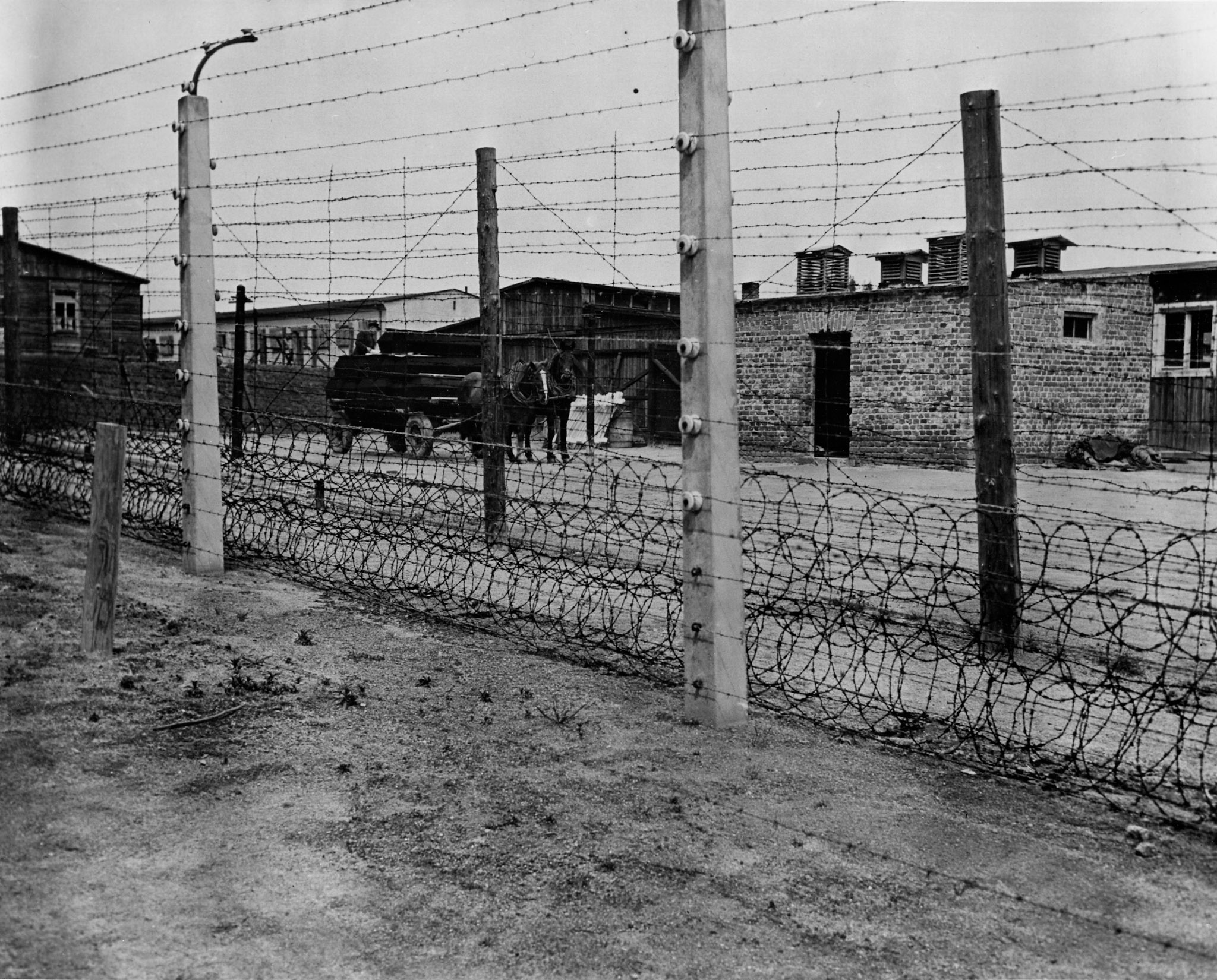
It is with blows of batons that our guards, called “Kapos”, enforce discipline and carry out orders. They are everywhere, in every corner! These are apparently positions of privilege! We are stunned to see with what zeal these “Kapos” rain blows down on their fellow prisoners.
At the slightest sign—not of rebellion, but mere incomprehension—they land a leather strap across your back or head, wherever they can reach. After this small foretaste of our jailers’ expertise, we are ordered to immediately abandon everything we possess!
In no time at all we are completely stripped! Over here the fine clothes, good shoes, woollen garments, jewellery, rings, glasses.
We cried with rage—our photos stolen, everything we had so carefully managed to keep throughout our captivity; everything had to be surrendered, without protest, without a word!
In a few minutes we are stripped of everything, naked as worms—not embarrassed, but inconvenienced at no longer having pockets in that terrible cold!
Our clothes are heaped pell-mell in a corner like a pile of rags!
We are made to run, in our birthday suits, between two lines of guards who beat us as we pass—despite the cold, the slippery ground, our bare feet. We circle like this for at least half an hour! Despite the cold we sweated from pain and anguish!
After this running torture they spray us with ice-cold water!
We then enter the barracks where we find our wooden sleeping troughs. What a painful beginning! What will our future be?
Suddenly two prisoners, not too badly clothed, appear armed with scissors and clippers. One after another we pass before one of these “barbers”. The first rough-cuts with large snips, lock by lock, leaving a few centimetres here and there… We kneel before the second “hairdresser” who finishes the job perfectly in seconds with his clippers! Everyone is shaved!
But it is not finished. Everything must go! And the clippers move again wherever nature had covered our nakedness!
Once finished, nothing remains! We are unrecognisable, disfigured! These are no longer men, but a kind of stooped beasts on spindly legs.
As clothing we inherit a blue-and-grey striped suit of thin wood-fibre fabric, unlined. A cap of the same uniform material. On our feet, wooden clogs with thick wooden soles and ribbons to tie.
Our first home is Block 20.
That evening—no food; it is too late! We must wait until noon the next day for a little soup. Quick, quick amid the hustle, the din of dazed men defending themselves as best they can because they are hungry.
I am lucky! I manage to secure a place in a third-tier bunk, under a shred of blanket. Head resting on our striped suit as a pillow. Because here one must undress for the night and sleep in a shirt—practically naked in these filthy troughs that no longer even have enough planks to hold the chopped straw that serves as mattress.
We sleep four to a trough, lying on our sides like sardines.
The dormitory swarmed with vermin: lice were absolute masters; at times fleas moved in waves. I was covered in red spots—flea bites; these creatures love human flesh. Lice lodge in the folds of our clothes. The little free time we had was partly devoted to flea hunting! The edges of the cross-planks of our troughs were black with the corpses of lice killed by our predecessors!
Woe also to anyone with a dysentery sufferer sleeping above them.
At 8 p.m., at the last bell, lights out in the barracks and absolute silence imposed.
Morning—summer and winter—reveille at 5 a.m.! The racket begins and the “guards” haul us out of the “bed” with baton blows. They enjoy themselves, shouting their wild cries. You would think the barrack is on fire. From now on it will be the same every morning at wake-up—no grumbling, even if a rubber truncheon lands on your skull.
Bed order is inspected like in the army; if it displeases the “Blockältester”, the “Schläger” take care of it with baton blows, and as punishment—no evening meal, which is all profit for our “guards”. We must then leave the barrack and line up for roll-call, forbidden to move. The same throughout the camp. We are about to meet our block chief. A small stocky man with a sullen, brutish face. He yawns with disdain and rage. He must be about fifty.
He owes his position as block chief first to his German nationality, then to his status as former convict sentenced to life at hard labour. He is therefore scum of Nazi society, serving his sentence here and having lost all contact with normal people for at least ten years. He has thus lost every human feeling.
As block chief he has the right of life and death over every prisoner. He vents his anger and contempt on us, poor defenceless victims. Killing a man is for him habit, whim…
At the command “po pjat” (by fives—in Russian) we all line up in rows of five and receive the traditional “welcome” speech.
He makes us understand that Germany needs help and arms to accomplish her great and worthy task! Germany shelters us, feeds us, clothes us. It is up to us to work for her with heart and conviction. Any refusal to work will be punished by death.
These speeches—translated into Russian, French, Italian and Czech by interpreters—are followed by the listing of further regulations and profound thoughts! The chief continues: the war was inevitable, but it will soon end and Germany will emerge victorious! The Anglo-Saxons will be thrown back into the sea and Bolshevism—the number-one enemy—will be destroyed. Followed by translations.
Then come recommendations, camp law: no sabotage under penalty of hanging; no political talk under penalty of death; no theft under penalty of the same fate.
Obedience and respect to the authorities, uncover when a Boche passes, etc., etc. In short, we must behave like good beasts of burden, submissive and hardworking slaves, always content with our lot! Our life is worth nothing!
The height of it is that we were forced to shout in chorus and loudly “Ja!” to approve all this nonsense!
According to his speech it was indispensable to wash, but… there was no water! Tragic comedy.
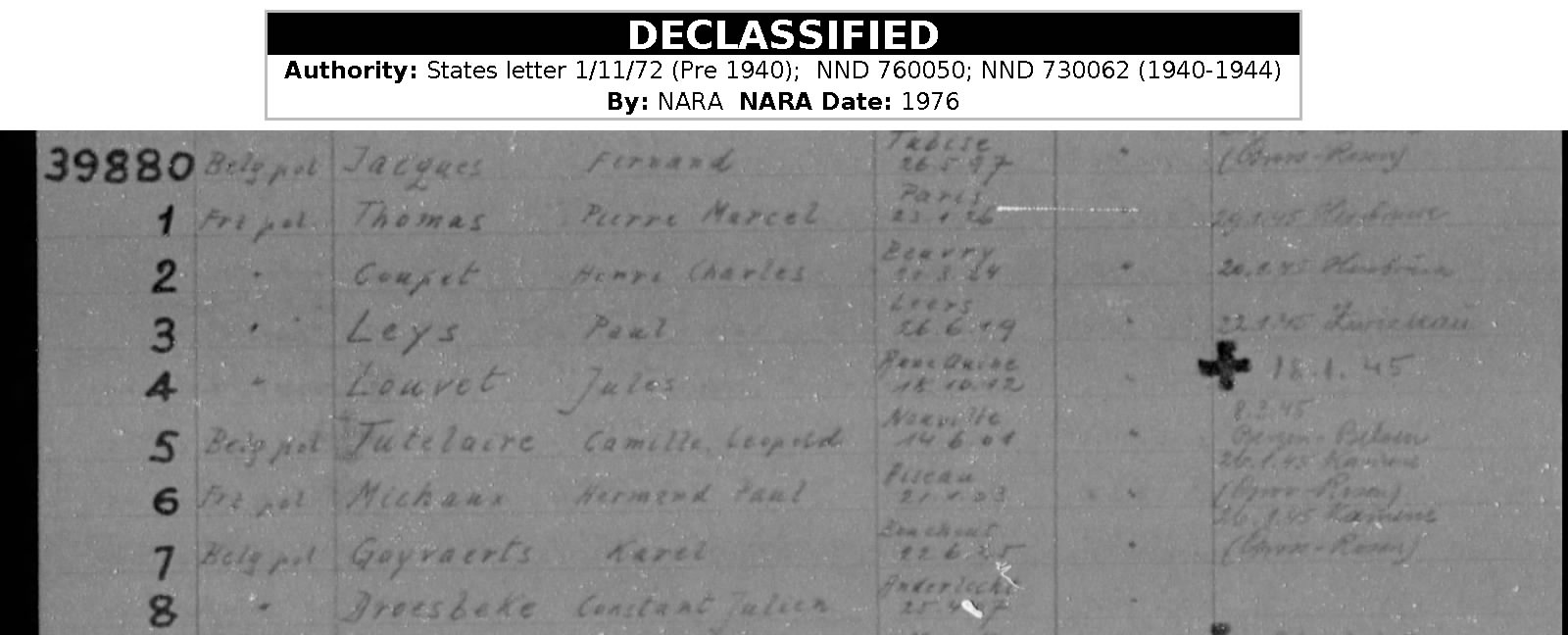
After having practically sworn obedience and fidelity to prison regulations, we had to have our registration number produced in duplicate and sew the two strips onto our “uniform”—one on the left shoulder, the other halfway down the left trouser leg.
Then registration in the camp ledger, which enrols us definitively into the community! We are now identified! My name has become: “nicht name B 39.888”. We will be assigned at any moment to the various commandos.
A bell rings—midday—soup time! Hunger claws at our stomachs. Ten men are detailed to fetch the “Kübel” from the kitchen.
We are assembled outside in front of the block, each with a rusty iron bowl and a large spoon. After quite a long wait in the cold, without permission to move, the fatigue party returns with five containers of “soup”!
The containers are placed near the block, in front of the “Kapo” or block chief and his subordinates. One of them holds a one-litre ladle—the regulation ration! Another opens a container and a cloud of steam comforts us. The thought of something hot to eat already warms us. Distribution begins at once and proceeds at high speed. Our bowl must be instantly within reach of the ladle. Too bad for anyone too slow to catch his meagre portion. The ladle is never filled to the brim—the distributor always arranges to keep an extra ration at the bottom for the baton-wielders, interpreters, and the “Kapo”’s favourites.
This soup was very thin indeed and the thickest part stayed at the bottom. Despite this meagre meal we felt a little better!
After this “gastronomic” dinner an old-timer tells me the following: here in the Oberpfalz we have the harshest climatic working conditions as well as the most primitive living conditions.
Public floggings are regularly carried out in the day-room of a barrack—usually in the evening after work. Detainees must attend and sing to drown the victims’ screams. For the slightest offence the whole block is deprived of food the following Sunday. The entire block must undergo disciplinary exercises—standing outside for hours in rain or cold.
Every prisoner risks at any moment being mistreated or even shot during work for no reason, according to the guards’ mood. Hanging by the arms twisted behind the back from a post for half an hour or more is commonplace. This torture causes insane pain.
Other refinements devised by our protectors: hours in the squatting position, not to mention hangings and killings.
Knowing these possibilities was precious for our future.
The little “freedom” we were granted was used to look around, to better study the camp and its activity. There were about 24 inhabited blocks, sheltering at that time roughly 10,000 prisoners.
Escape impossible. The camp was ringed with high-voltage barbed wire. Touch the wires and instant death by electrocution.
At the four corners of this formidable perimeter stand the main watchtowers—true square stone towers topped with small roofs on vertical wooden posts to give the pivot-mounted machine gun complete freedom of action, permanently aimed at the camp, ready night and day to spit bullets at anyone tempted to approach the electrified wires.
At night, in addition to the machine guns, powerful searchlights sweep the camp at regular intervals to detect would-be escapers—or rather those tired of living. I often heard those machine guns open fire on prisoners who preferred sudden death to camp life.
Between the main towers, every thirty metres or so, smaller lower wooden watchtowers are placed where a Boche soldier armed with rifle or sub-machine gun stands permanently. Finally, along the entire perimeter, large lamps every five to ten metres brightly illuminate the electrified wires.
We are therefore very well guarded and nothing remains but to resign ourselves to survive, live by camp law, conserve our strength and defend ourselves individually. Here there is little or no solidarity: each for himself. One must try to develop a heart of stone that nothing can move in order to survive in this hell. This attitude is forced upon us.
The regime is so harsh that every life is in constant danger.
One must defend oneself as best one can, pursue only this goal, because we have only one hope: the end of the war—and as quickly as possible. The hope of surviving in this camp is reduced to a few months.
No question of falling ill—for the sick the only prospect is the crematorium. The sick are regarded as parasites who eat without working! Germany has no use for such people and, in its interest, destroys them. What cynicism!
Scenes of bestiality at morning wake-up recur regularly and one quickly becomes accustomed to them. While we shiver for hours in front of the block the “Kapos” come to choose and sort their livestock! It is they who designate their slaves and the number required. Outdoor work and quarry work await us. It snowed all night and the layer is nearly a metre thick. We are only concerned with clearing it—and at the double. The snow is thrown onto a nearby slope close to the sewage plant.
A detainee arriving completely exhausted to dump his load of snow—the SS man behind him delivers a kick in the back that sends the unfortunate tumbling in an avalanche toward the valley. Anyone who cannot free himself suffocates or remains below without help and freezes to death on the spot.
The SS man’s little joke is complete.
The punishment the SS delighted in during winter consisted of plunging a fully clothed prisoner into a tub of water in the laundry. Soaked to the skin, he is then exposed on the roll-call square where he turns into a block of ice. Exposed parts of face and hands form large blisters under the frost that soon burst. Depending on the degree of punishment the torture is sometimes repeated. The unfortunate, no longer able to stand, freezes where he stands until death follows.
Certain outdoor tasks were not conceived for productivity but purely as harassment. One had to carry mounds of earth and sand in any available container from one place to another a hundred metres apart. According to the SS’s whim the material then had to be carried back to the starting point. All under the mocking looks and sneering smiles of the SS. The same method was used at Breendonk.
Days follow one another but do not resemble each other.
In the morning when the barrack empties the first fatigue duty is to remove the dead, who are simply thrown out of the window without ceremony.
Generally, to gain a few extra rations, corpses remained two or three days in their trough. I thus had the “good fortune” to sleep three nights beside a corpse!
When these unfortunates reached their end here below and could no longer drag themselves along, they remained indifferent even under the most violent blows from the guards. They lingered in a corner of the washroom near other corpses, waiting for the moment of release!
They died thus in silence, without the slightest care, without the slightest physical or moral help, without the slightest relief!
One should not be surprised to hear, in the middle of the night, a corpse fall from the third tier—sometimes pushed back by his trough neighbour. Corpses lie on the floor; we step over them quite naturally, out of habit, without being disturbed. We push them aside a little, out of the way. At one point I was given the macabre task of evacuating corpses.
It happened that, trying to remove a dead man from a third-tier trough and no longer having the strength to hold him, I fell to the ground with the corpse on top of me. Over time one becomes indifferent to the sight of death—one learns to ignore it and handle it without respect, like an inert object.
We dragged them to the washroom where we stripped them to pile them one atop another, tangled, legs shrivelled like bamboo or swollen with water. Bones protruded through the skin. Faces bore the last expression of suffering—or that kind of macabre grin caused by an open, drawn mouth and wide eyes that still seemed alive.
But they suffered no more. It was finished for them.
On their bony chests, ribs standing out in relief, their number and nationality letter were roughly painted in red with a large brush.
I looked at them and could not shake off the sinister premonition of our inevitable fate.
The latrines—which I shall speak of later—were the places where the dying liked to spend their final moments sheltered from abuse. Very often they remained lying on the ground in the cold and nauseating damp. They died there wordlessly, delivered from all torment. And to think these corpses are the beloved children anxiously awaited by families. Fathers, mothers, brothers, sisters from whom help is expected at home.
These human beings who resisted the Nazi enemy, who gave everything for their homeland, for the freedom of their fellows!
How many hundreds did I carry to the crematorium, or push in open-air rail carts surrounded by Boches and their dogs. The work had to be carried out in good order.
After this macabre and unhealthy task I did not even have the right to wash my hands!
The most frightful and at the same time most painful memory was when, together with a Russian prisoner, I carried my comrade DELCHAMBRE from Brussels. I had known him in Saint-Gilles prison. When we reached the crematorium I wanted to lay him gently on the ground. But my Russian helper, unaware of the gravity of the moment, overturned the stretcher with habitual brutality. My friend’s head struck the frozen ground so violently that I was appalled. My heart was torn. This is how man can become insensitive and bestial.
Dreadful scenes were commonplace.
Recall that each block held between 700 and 1,000 men. At night everything was hermetically sealed. Anyone unfortunate enough to need the toilet had to ask the guard’s permission. Woe betide him if the guard was in a bad mood or if he made too much noise. It was unbelievable that one had to scheme with the guard or his acolytes merely to reach the latrine. Anyone found there without permission was chased away with heavy kicks. Out of fear one relieved oneself on the spot, anywhere out of sight of the guards. It was in such filth that we continually waded—with all the imaginable sanitary consequences.
Dysentery sufferers—and few escaped it—who no longer had the strength to hold on or the time to reach a place, or who could not wait for a free spot, were forced to relieve themselves where they stood.
For toilet use one had to queue—and block chiefs and trackers had absolute priority. They would tear you away, finished or not. One relieved oneself on the spot, soiling one’s neighbour. Toilet paper did not exist. Excrement was everywhere.
The Boches had installed daytime latrines—a large common shed. It was a kind of cabin without doors; the central part was occupied by a deep rectangular pit. Along each side a smooth, slimy fir trunk without backrest served as seat—smeared with excrement in places. Users had to hold on tightly to avoid falling backwards—with the unenviable result of a bath in the pit. Falls happened more than once, always fatal. These latrines had one enormous advantage: they were the only place where idle prisoners could shelter from bad weather and baton blows.
In a corner of the block stood the “apartment” of the Blockältester—sealed against the slaves’ stench and accessible only to him. Nothing was missing—not even a good fire.
As for the Schläger, they knew every trick. All those who “governed” helped themselves to a share of the daily booty. They were always well dressed; they were the lords of the barrack. They beat, they killed—by caprice or for pleasure. They wore the green triangle on their chest, badge of common criminals of which they had to prove themselves worthy! They also proudly wore a small number. Could they still retain any shred of human feeling toward nameless convicts—all this in a savage setting, cut off from any trace of civilisation? Their occupation consisted of enforcing discipline through punishments, beatings or floggings.
One must have experienced a “stay” in such a camp to truly understand the meaning of the word freedom, to appreciate the charm of a house inhabited by free people, and to remember a past of happiness. For the “Kapos”, freedom is a word erased from their vocabulary.
They are convicts with no hope of ever returning to normal life. They have too many crimes on their conscience—but they suit the Nazis perfectly for destroying thousands of innocent foreigners hostile to Hitlerian doctrine.
I hasten to add that almost all satellites of the Kapos are Slavs, Russians, even Dutch. Slavs are legion in the camp; they certainly represent three-quarters of the total strength. They are the most fanatical torturers.
Being only a small minority, Belgians and French are lost in this herd and suffer the discipline without the slightest protection.
Master Kapo also keeps young protégés of dubious morals—like women in a pasha’s harem. These boot-lickers go so far as to accept and satisfy all the Kapos’ vices—for an extra ration of soup. Ignoble!
It is six o’clock in the evening; the bell signals the end of the day. All commandos have returned from work. The camp swarms with prisoners like an anthill. Everyone must take position in ranks for roll-call. Hurry. It is a real mêlée of rushing men moaning under blows, “Los!”, “Po pjat!”, “Ruhe!”. The crowd finally stands motionless, aligned in fives, pressed in front of the barracks as the SS enter.
They record the number of prisoners. Wild energetic shouts from the Kapos. “Achtung!” – “Mützen ab!” The count is passed to the SS. A thousand reasons make accurate counting impossible: the sick groaning in the latrines, unexpected deaths!
We wait like this for hours in the cold and snow. The count must be exact!
Our chiefs then proceed to distribute the evening ration. Stomachs are empty, appetites ravenous. We return to our barrack in good order and snatch on the way the ≈200 g chunk of stale black bread. After this quick meagre meal all that remains is to go to bed!
The next day we must toil at exhausting tasks beyond our strength, without a minute’s rest.
Not a very encouraging prospect… It is with some anxiety that I join a group of about a hundred prisoners doing earth-moving work. From dawn to nightfall, with a half-hour halt at noon—just time to greedily swallow a bowl of soup for the entire day’s meal.
Handling overly heavy picks or shovelling earth with oversized shovels, carrying stones at arm’s length over at least a hundred metres. A gruelling, thankless task under the watchful eyes of sentries in the watchtowers.
The nearness of machine guns sharpens the zeal of commando leaders and overseers. They direct the work with incomparable diligence. To pause even for a moment is to risk a beating. The tools must work!
If an unfortunate weakens, if another has frozen hands and can no longer grip a tool—immediately a hail of blows. One quickly becomes accustomed to these scenes of brutality.
My first attention is caught by an almost continuous procession of stretcher-bearers loaded with bodies heading toward the crematorium. The stench from a thick low-hanging cloud reveals their ignoble permanent activity. Night and day without interruption the oven devours the corpses brought by the burial commando.
How many times was I assigned to this disgusting task—to the point that even now, thinking of it, I can still smell the stench that impregnated my clothes.
No risk of unemployment—the work is guaranteed.
Behind blocks 20 and 21 stands a small cabin that looks almost welcoming with its pretty curtained, flower-decked windows.
Curious little villa—so pretty amid such desolation!
It is the residence of a handful of properly dressed—even pretty—women where camp dignitaries are received…
In the evening a special bell announces to holders of an entry ticket that they may go there.
I was assigned with two Poles to repaint a room in this house of prostitution. This indoor work did not last long. It would have been too good! Painting indoors, in the warm, in full winter! What a luxury!
Guarded by a Luxembourg SS man who had fought in 1914–18 and was now a Nazi war volunteer, he was very approachable—proud to speak French among Germans. He spoke to me of Brussels where he had been garrisoned during the war. He claimed to have friends in Schaerbeek and gave the impression of being pleased to meet a Brusseler in me. “At least here are decent people,” he said.
The next day he brought me a pair of socks. I passed from hell to heaven. A little kindness instead of baton blows! I had heard no normal word for months. It was he who told me the brothel women were French—promised freedom after six months of “service”. It was probably a blatant lie.
Opposite this special block stood barrack 19, filled with children aged 8 to 16. They lived there in indescribable swarming under much the same regime as ours—probably slightly less harsh, and not required to work. The Nazis granted them idleness—an appreciable advantage for such frail youth. Despite this special treatment children died there of malnutrition and lack of care when ill. Their bodies followed the same path as the others.
Between the kitchen and Block 1 one climbed the slope via an enormous staircase separating two rows of blocks—barracks 1–7 on one side, 8–14 on the other. This staircase was a construction masterpiece—about a hundred steps several metres wide, made of large hand-cut stone blocks assembled with rudimentary tools. How many human lives did it cost? Only the stones could answer. The camp is riddled with similar constructions—buildings, watchtowers, etc.
Near the camp lies this frightful quarry where many unfortunate convicts are sent for forced labour. This section includes the infamous “Steinbrücke”—the most sinister and dreaded worksite in the entire camp.
I receive the order to reinforce the thinning ranks of a Steinbrücke commando.
December is well advanced; the cold persists. The icy wind lashes the hill and snow whips our faces during our convict labour. This accursed commando I so dreaded is a severe blow to morale.
A hundred prisoners work in groups transporting stones on steep, slippery ground. The stone is studded with tiny glittering specks that sparkle in the sun.
How many men has this Steinbrücke not killed?
The work was so hard that we could scarcely walk—dead from fatigue and exhaustion.
Reeling like drunks and insulted as idlers, we were often returned in tipping lorries—living and dying, all unrecognisable! Arriving at the camp entrance we were dumped like loads of gravel. Kapos appeared with hoses and sprayed us alternately with cold and hot water. After this treatment at least 50 % of our group was ready for the crematorium. How many convicts began their day without finishing it because of such treatment?
The infamous torturers beat these unfortunates even when they had fallen unconscious face-down in the mud.
Many prisoners have suffered too much and can bear no more. They no longer manage to react to keep morale alive in order to survive. They sink into a kind of indifference, despair, letting-go. At this stage, without the slightest resilience or will, they approach the tragic phase—it is finished for them; they end their painful calvary.
I manage to slip from one group movement to another commando!
Any commando—but no longer stones. It is a matter of life or death! I am now in a tree-felling commando.
Another disappointment awaits me. We must climb a whole hill by a small slippery path, each man carrying two fir trunks. Work like beasts of burden. Beware of slips—the dogs are at our heels to bring us back. One thus loses one’s clogs and cannot retrieve them. Anyone who loses his clogs must continue barefoot in the snow. I witnessed cruel scenes there, as in the quarry.
Transport can never stop—neither going nor returning.
Some prisoners have purulent wounds. They must make superhuman efforts to carry these trunks. For them it is a true Way of the Cross—with how many falls, how many stations, how many baton blows? When one has the good fortune to return to camp in the evening one is anxious for tomorrow. What work will one be assigned next day?
Christmas week approaches. It is bitterly cold; the sky is clear with an almost full, brilliant moon. Everyone thinks of past Christmases spent with family in previous years. Everyone remembers Yule logs, midnight Mass, almost festive meals despite rationing difficulties. Those were good times!
We shall have to be patient once more this year and spend this beautiful day among the Boches—behind barbed wire, with illness, hunger, cold and the other miseries of Nazi camps.
Whenever I can turn my gaze westward—toward our homeland for which I fought so hard—I feel a glimmer of hope. We cannot smell the Christmas dishes, but we speak of them among ourselves, making plans for the future upon our return home.
Here in the whole camp we breathe only the acrid smell of burned flesh and skeletons.
As in times past when at Christmas we lit bonfires of joy, here we build pyres of fagots and corpses.
What a sad Christmas Eve, this 24 December 1944!
Night has fallen—it must be past six o’clock.
The cold is terrible…
Suddenly a bell rings through the camp—unexpected, abnormal. Everyone wonders and questions.
Soon general commotion throughout the camp. In every block the order comes to go outside.
Thousands of prisoners line up around the large square whose centre remains empty. The camp is lit by every searchlight. Silence is imposed on the 15–20,000 convicts. It is worrying!
The Nazis have organised a grand spectacle in their own fashion!
We are forced to witness spectacular hangings!
The crossbar of the football goal will serve as gallows. They wish to give us a lesson—for our own good and that of the community.
Several armed SS arrive at the place of execution. Among them a menacing officer shouts a few sentences in German we do not understand. Then come the poor condemned—six of them—emerging in single file from a corner of the camp, trotting between several well-armed soldiers. These unfortunates have their hands tied behind their backs. One cannot help thinking of the spectacle the Romans offered in their amphitheatres when defenceless slaves were thrown to the lions.
The six condemned are lined up before the common gallows that will end their martyrdom.
Prisoners set up chairs and planks beneath the gallows. The condemned are calm, resolute, heroic. Their courage defies the executioners. As one man they climb onto the planks.
The furious officer pronounces a brief sentence condemning—without appeal—these innocents who doubtless committed some breach of camp regulations to death by hanging.
Order and discipline must prevail!
After this short pronouncement the vassals—prisoners like ourselves—pass a rope around each condemned man’s neck. One of them shouts at the top of his voice a few words whose meaning I have never learned.
Everything is ready. General heavy silence. Everyone is terrified to see thousands of men held in check by a handful of heavily armed Boches—authors of these cowardly tortures.
In case of any intention to revolt—what could be done, even with our numbers, against SS armed to the teeth!
The cries of the condemned find no echo. Sub-machine guns are trained on the victims.
Suddenly the planks are kicked away and six bodies hang by their necks in the void. Is death instantaneous? Some bodies seem to writhe for a moment—feet twitch, bodies turn at the end of the rope, tongues protruding.
The Boches are satisfied and convinced the lesson will bear fruit! The SS boot-lickers will earn their extra soup.
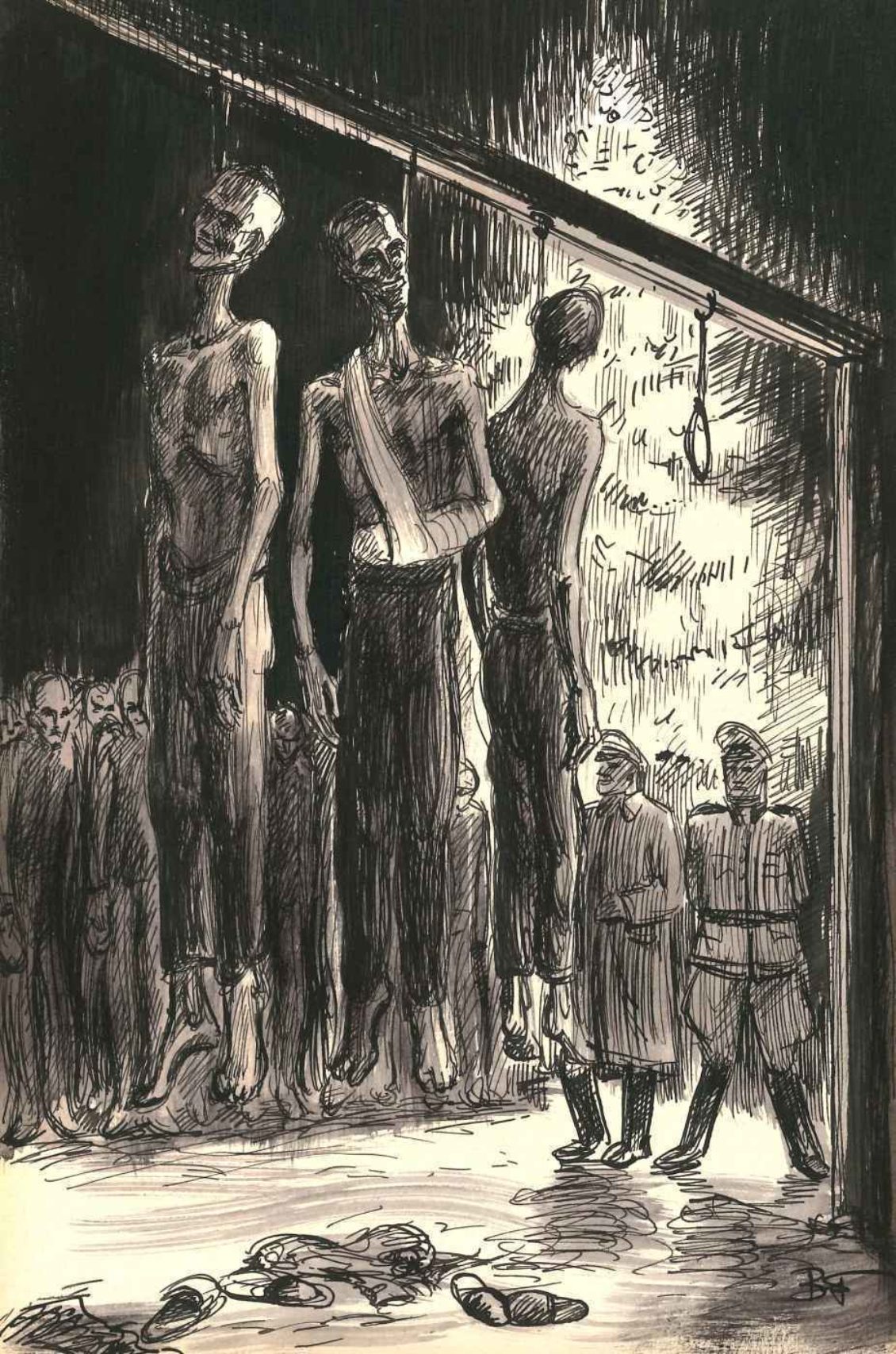
Imagine this horrible spectacle: men hanging in the setting of a gigantic illuminated Christmas tree. These murders came to swell the killings committed in the shadow of the torture chambers!
We return to our barracks hearts heavy and filled with hatred toward these bestial Nazis. To our great astonishment—and completely thrown off balance—we are greeted with music. The Blue Danube is played by the camp orchestra.
Such collective demoralisation has remained engraved in our memories forever. We thought of our dear lost freedom—for which we yearned like a chimerical ideal.
While the deportees lived in mad hope of imminent deliverance by the Allied armies, another four months had to pass—the four most difficult, most murderous months of deportation before—too late for so many—a long-awaited liberation finally came.
Despite everything, New Year’s Eve approaches and the camp orchestra is present.
Heart heavy, I find myself in my trough among my two night companions. On one side Maurice FIEVEZ, priest of Pont-à-Celles; on the other Charles GOYVAERT of Boechout. One horrible thing happened at that moment: Charles did not know his brother Henri—also a prisoner in the camp—had died that afternoon!
It was about 11 p.m. when the orchestra withdrew.
Charles gets the idea of going to wish his brother a happy New Year. I did everything possible to dissuade him, telling him he would run too great a risk leaving the block at that hour. The next day Charles told me his brother had left on a transport commando. He never knew of his brother’s death—even after returning home. He—and his parents—always remained convinced his brother would return from captivity. My friend Charles died at home from the after-effects of his captivity a few weeks after returning from Flossenbürg. The Goyvaert parents had only these two sons. Both dead—victims of the Nazi executioners in the service of our homeland.
May they never be forgotten!
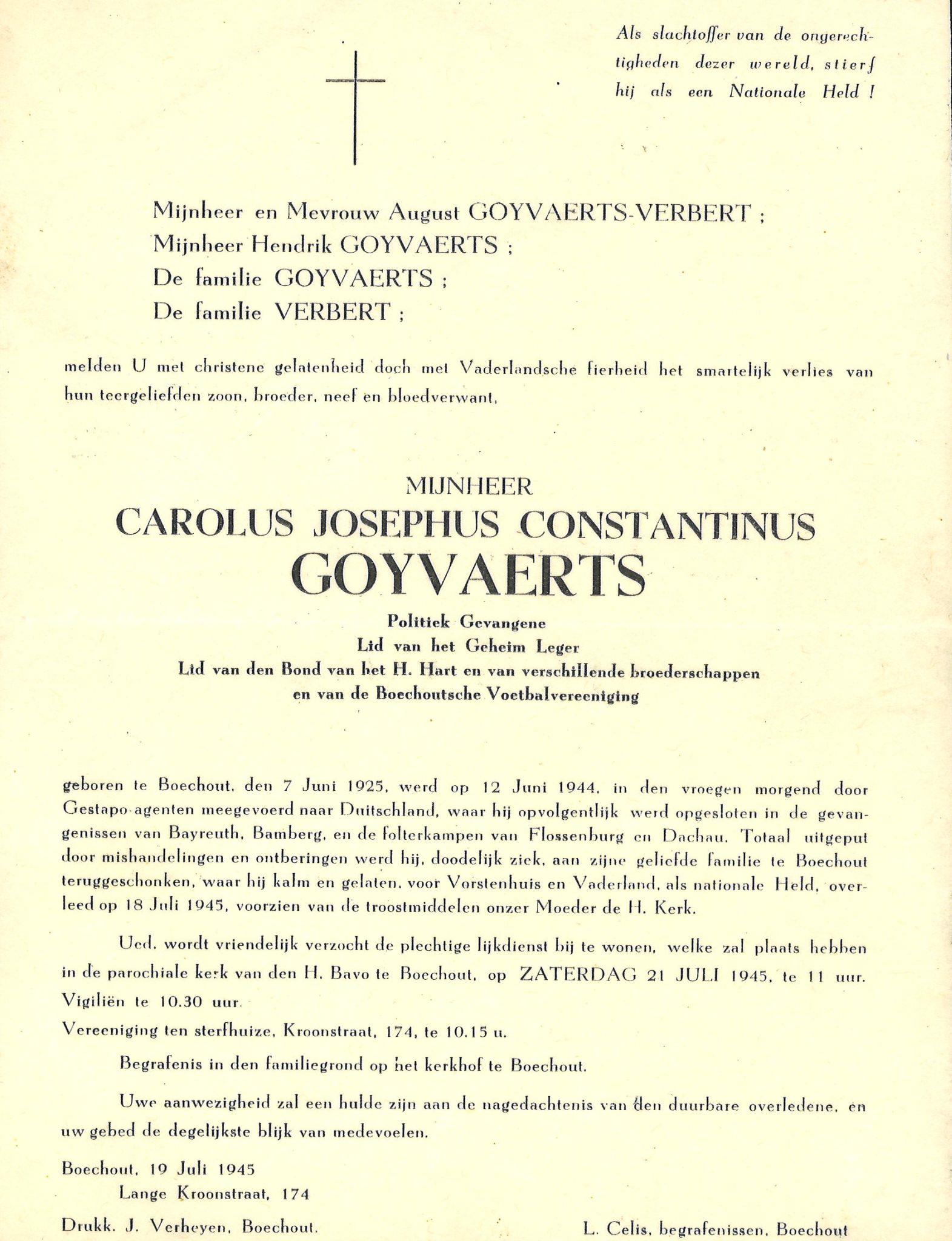
On this New Year’s Eve I think first of my Mother.
It is the first time I cannot send her my best wishes for a happy new year or embrace her. This privation hurts me more than all the other miseries I have known until now. I think of her old age and the grief that must be hers from uncertainty and worry about me. She who had a hard life from tender youth—my parents were already orphans when very young. What a calvary my Mother endured! My father, of frail constitution, was often ill. With exemplary courage my Mother nursed him for seventeen years. He died at 45 after three surgical operations.
Mother adored me.
Have I fulfilled my duty toward her by leaving her to serve my country? Mother who spoiled me so much…
This moment seems bleaker and more desolate than any other. It is incredible how one can cling to life in such moments!
I suffer like the other detainees but I believe I possess a special guardian angel! I thank the good Lord for endowing me with such a solid physique, good constitution and exceptional optimism.
Despite everything morale improves and hope lives in our hearts.
According to an ancestral tradition—and until my last breath—I will shout with all my strength that I love my homeland and that never, for anything in the world, will I commit the shameful cowardice of betraying her.
It was not only at Christmas and New Year that music was played in the barracks. To encourage the “Blockälteste” and “Schläger” in their brutal work the SS regularly offered them a Sunday concert. On SS orders certain detainees had formed an orchestra—first-rate musicians, conservatoire prize-winners, well-known singers—about thirty in all. The detainees also benefited. But did they not torment the dying even while playing with all their heart to soften manners and bring a little cheer? For music very quickly bred sadness.
The next day, leaving the barrack, I discover near the window overlooking the camp square a heap of corpses. It seemed so significant that I hurried over.
I saw with horror that their number approached eighty bodies—piled one upon another in the most unnatural poses that showed what these unfortunates had endured before dying.
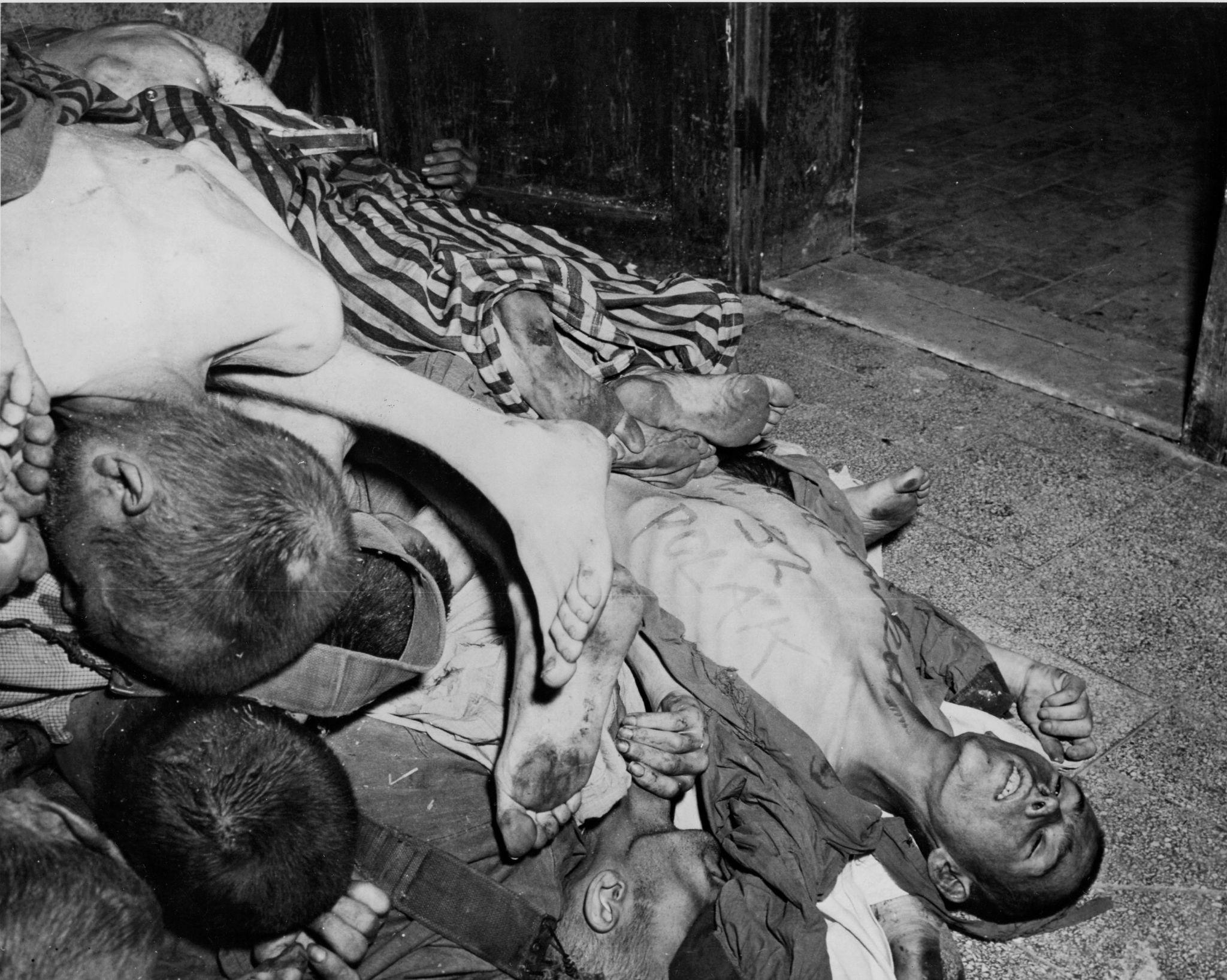
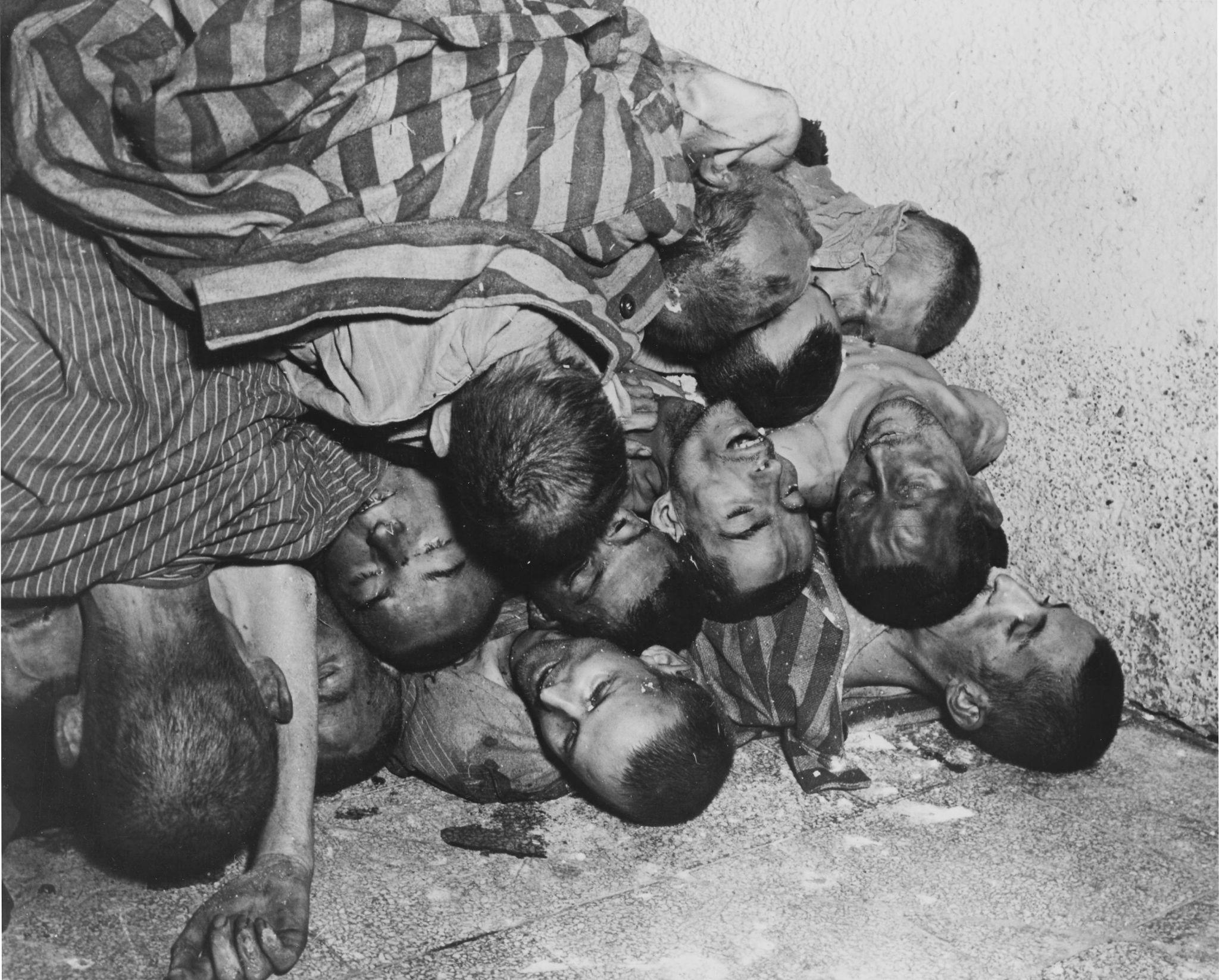
The semblance of joy from the previous evening was suddenly turned to melancholy.
These were the remains of prisoners who had been part of the mine fatigue detail and brought back from work.
The dead had to be replaced to keep the quarry operating. New able-bodied convicts were therefore needed.
New roll-call in front of the block; prisoners had to file past a German flanked by a prisoner holding a pot of red paint and a large brush.
This indicated they were organising transport of a new convoy by sorting prisoners according to physical condition—marked with a number from 1 to 4.
Naked as worms we paraded before the veterinary expert who decided our destination with a single glance. My turn came—I was judged fit for transport; No. 2 was painted on my forehead. For information here is the meaning of these numbers:
- No. 1: healthy and fit for heavy labour—rarely used given the general weakness of detainees;
- No. 2: men still relatively capable of hard tasks;
- No. 3: weakened but from whom some service could still be extracted;
- No. 4: reserved for the unfortunates designated for transport to the gas chamber.
The SS chose the required number; fortunately I was exempted from this fatigue. It took incredible luck to survive in this hell.
A dysentery epidemic raged in the camp. Each affected barrack was quarantined. But no other measure was taken by the camp authorities. A healthy person in contact with a sick one could become infected. The dysentery germ can be transmitted by bedding, body contact or food. Onset is sudden—nausea, vomiting, fever.
Then come colics in crises—especially during bowel movements that become incessant, often more than twenty times a night, sometimes with bleeding.
We had neither medicine nor medical care.
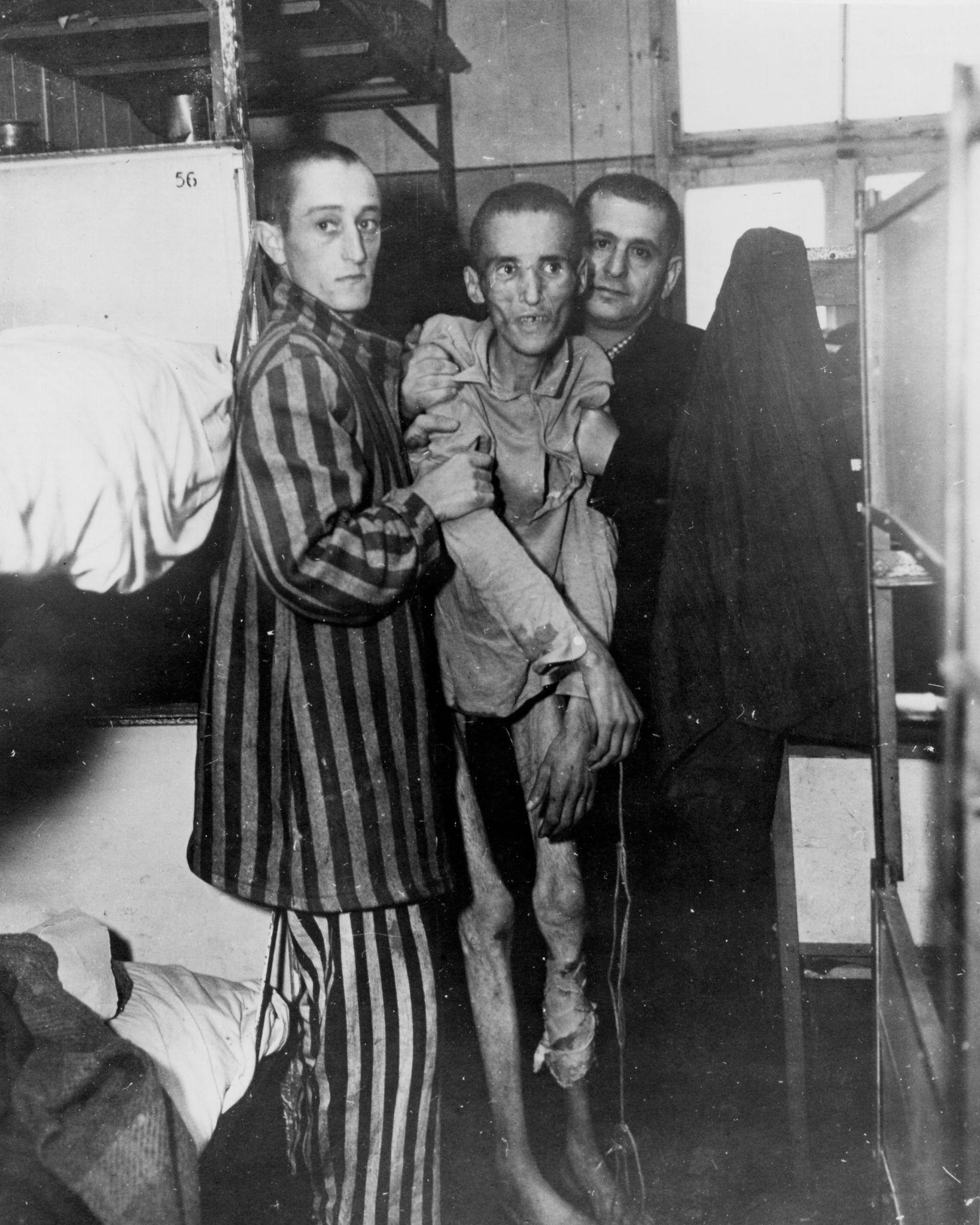
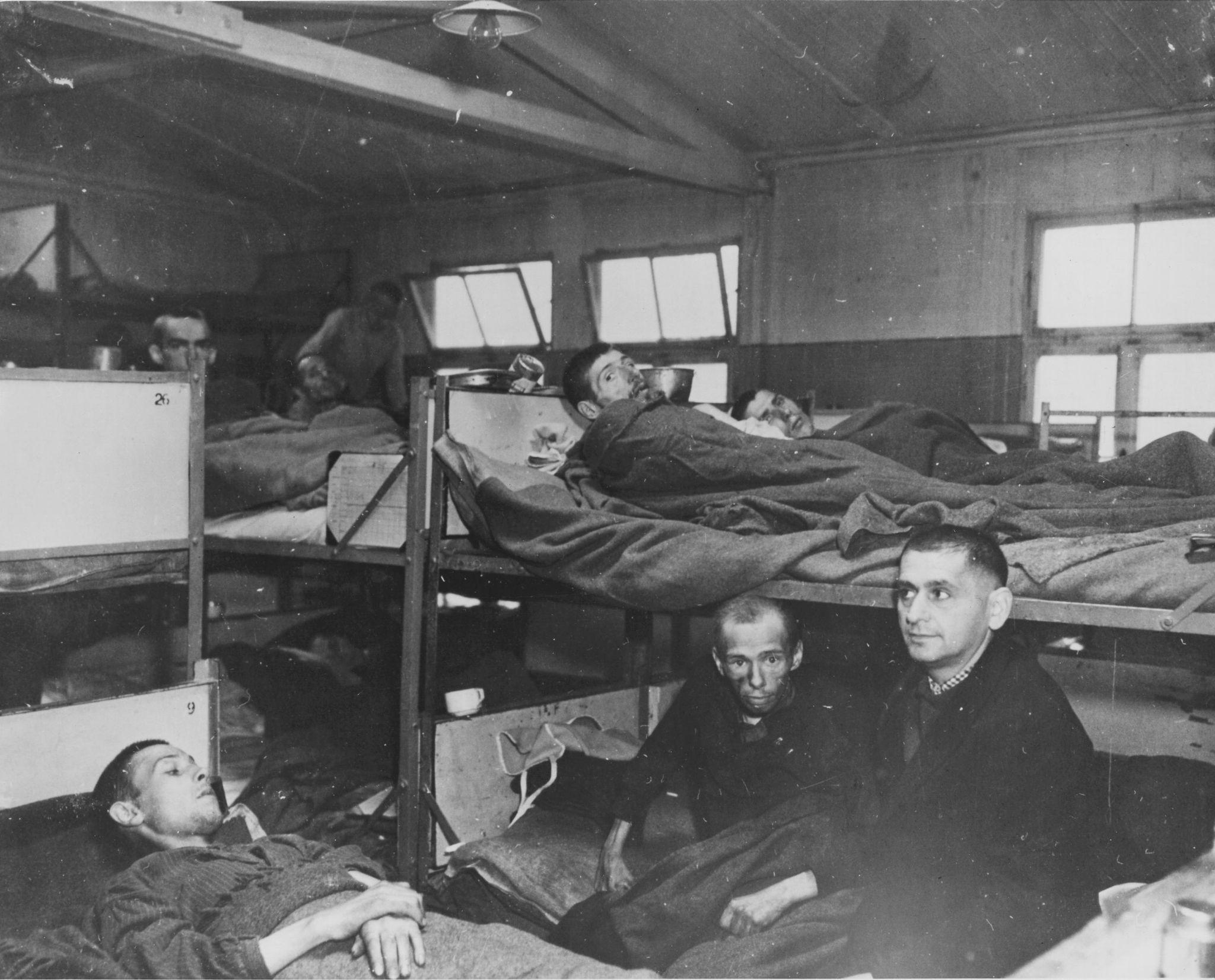
I recovered after about fifteen days while a high percentage of those affected died.
The barrack was simply sealed off and abandoned to itself.
In a sworn deposition before the International Military Tribunal at Nuremberg during the trial of the principal war criminals—such as Göring and others—witnesses spoke of several hundred deaths due to lack of care, hygiene and cleanliness in every respect.
I had the chance to go to the showers twice in six months.
It was far from pleasant. We entered a rectangular room with wet tiling. All windows wide open—the air foul and reeking of chlorine. We had to undress quickly under baton blows. According to rumour we were in for the whole night. Men shed their rags and piled them pell-mell in a corner. We were all naked. It was incomprehensible how some could still stand. With the savage brusqueness of the Kapos we were pushed to the far end of the room, pressed one against another, then filed in single file toward the other end past the barber service inspecting body hair. No one escaped. This operation finished—perhaps after two hours—we dispersed to undergo the showers. Fifteen minutes under cold water. We were washed and clean—but at what cost!
We chattered with cold—then suddenly almost boiling water arrived.
The same procedure restarted for disinfection—and lice they found! We passed before a man who sprayed our head, armpits and backside with a greasy, stinging, biting liquid. Lice and fleas were rudely disturbed! Our night seemed endless.
At daybreak our clothes arrived—treated in disinfection ovens. Designated fatigue parties brought them back.
The clothes were hopelessly mixed and there was a rush—under baton blows—to recover one’s own rags.
Exhausted, having slept not at all, we returned to the block in good order. A new day of forced labour awaited us and our convict existence continued.
The gnawing uncertainty of tomorrow!
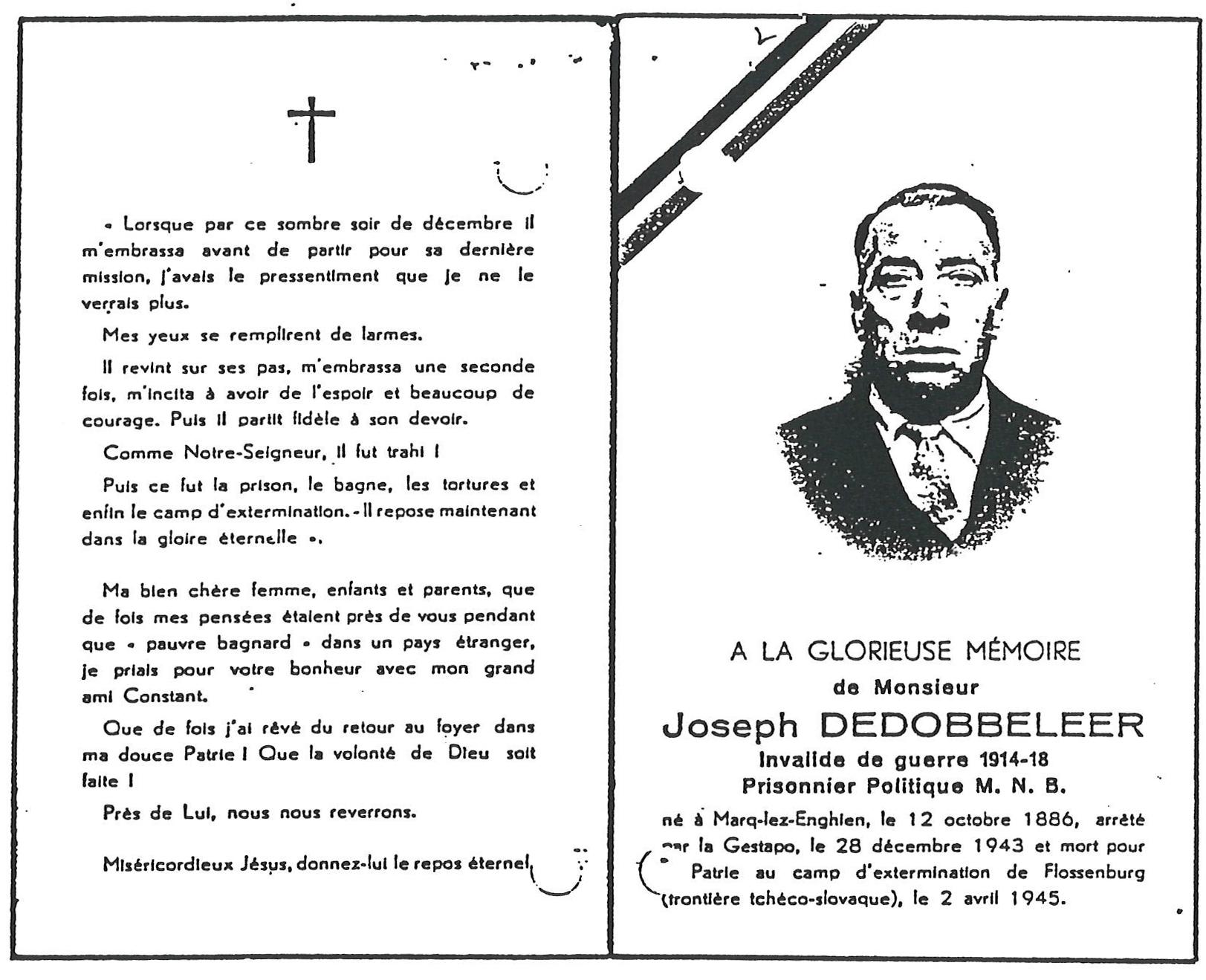
We went through moments of extreme physical—and also moral—weakness, certain that death lay in wait. One morning my friend Joseph DEDOBBELEER was detailed for a commando. We used to say a prayer together.
My friend Joseph, embracing me, said:
“I probably will not see you again—I feel ill.”
He nevertheless returned—completely exhausted—to die in the camp on 2 April 1945, less than a month before our liberation!
He begged me to inform his wife, children and parents and to pass on his last words.
“Tell them clearly that I often dreamed of returning home to my sweet homeland—that my last thoughts were with them.”
We had to work outdoors at –25 °C without socks or gloves—in our thin striped suits. The result: frozen fingers, hands, feet.
Twenty-five lashes of the whip for anyone reporting sick. They were all sent back to work despite frostbite and other illnesses.
Amputations of fingers, hands or feet were performed—each time with fatal outcome.
My friend Maurice FIEVEZ suffered from a very common camp ailment—a kind of purulent oedema manifesting as a leg ulcer. Maurice no longer dared present himself at the infirmary.
The Blockältester—certainly aware of the Allies’ advance—tolerated him remaining in his trough. According to a doctor Maurice was probably suffering from ecthyma.
The lesion begins as a pustule then spreads in depth and surface. It can become complicated by lymphangitis and adenitis. Ulcerations sometimes turn gangrenous. Ecthyma affects the overworked, diabetics, varicose sufferers. Scratching often introduces dirt into the wound—and especially these lice-infested beds are the cause of spread. Standing for long periods and poor nutrition also play a role.
Maurice suffered martyrdom without medical help.
I tried to help him with makeshift means. I tore pieces from my shirt and soaked them in hot dishwater from the SS kitchen. Maurice said this relieved him. Eventually the flesh decomposed so badly that the smell bothered me.
The camp was liberated by the Americans on 23 April 1945. Maurice dragged himself to the entrance to salute our liberators. Blood ran from his leg.
He regained freedom—but at what cost!
Arrested 1 December 1942 on the altar of his church in Pont-à-Celles while celebrating Mass, he died in Flossenbürg extermination camp on 26 April 1945—completely exhausted by long detention.
We had agreed that on our return home we would drink a gueuze together at “Au Damier” tavern near Brussels Midi station.
Despite our liberation the mayor of Flossenbürg remained responsible for the camp. I asked him for permission to bury our comrade Maurice in a grave instead of throwing his ashes into the common pit. This was refused…
The president of the Former Inmates of Flossenbürg is said to have brought Maurice’s body back to his family in Frasnes-lez-Buissenal. I know with certainty that it is not Maurice, but…
For more than forty years, every 1 November I place flowers on this grave containing the remains of one who suffered as I did at Flossenbürg and who did not have the chance to survive.
I regard this gesture as a duty—and at the same time I see again the FIEVEZ family who have become my own.
Strange…
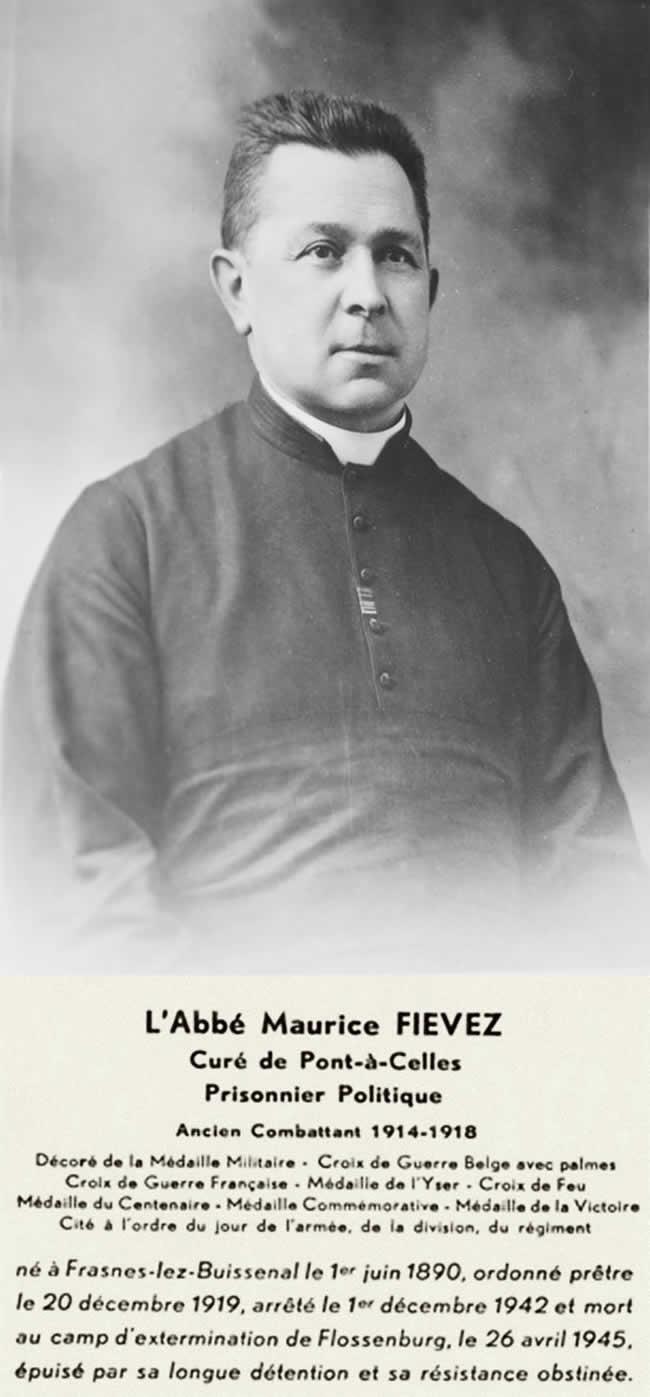
I met Maurice FIEVEZ in August 1944 at Saint-Gilles prison; he had come from Charleroi prison.
The Boches moved me regularly and I sampled several “houses”: Bayreuth, Ebrach, Bamberg, Flossenbürg.
Near-incredible coincidence: it was always in the same cell that I regularly found Maurice.
On 8 March 1945, late at night, a convoy of new prisoners arrives at the camp. Overcrowding is such that deportees are forced to sleep in the alleys between blocks, in washrooms—even in toilets.
Typhus cases, tubercular patients and other sick are mixed with the rest. It is an appalling mixture.
Suddenly I hear a voice at the level of my trough:
“Little Belgian, wouldn’t you have a little space for me?”
Recognising the voice I shout “Maurice!!”
My friend Maurice bore number 86.379.
I pulled him close and we never left each other again until his death.
Camp life continued as before.
Our last work schedule had been horrible. Reveille at 3:30 a.m., 3 km march on foot hunted like animals. Return around 8 p.m., roll-call at 10 p.m. In short—five hours rest with 200 g “bread” as sustenance and in the final days only a handful of oats. I felt very unwell.
To change ideas a little and find some rest we could move freely on the camp square on Sundays. We thus met some men from our group and some friends. At one moment we saw in single file a group of detainees with SS and dogs heading toward the washrooms.
They carried blankets of dysentery dead—soiled with blood and excrement.
In this group was X—who had betrayed us to the enemy.
We were astonished to see his defeated, suffering, tired face—gaunt and repulsively filthy. He was mud from head to foot.
Here Bursens fell; the dogs attacked him while the Boche overseer kicked him full in the face so that blood flowed from his mouth. We were stupefied!
On returning from the washroom he came to ask our forgiveness for his inglorious behaviour toward us.
We could hardly believe our eyes! He said weeping:
“Have you still no pity for me—have I not suffered enough?”
We were certain no one would ever leave this cursed prison alive! By then our group already counted four dead. Despite X having cowardly betrayed us to the Boches we decided to forgive him. That is why I never opposed the honour our commune of Merchtem paid him after the war—placing a commemorative plaque on his house front and naming a street after him. But for my dead comrades, the survivors and myself this remains a grave injustice. He had been weak—even before Gestapo interrogations—believing their lying promises, believing he could save his skin, he “gave” us.
One must know how to forgive—but not forget!
Another frightful act by the Boche guards: a boy of about 14 carrying a bucket crosses an SS man. Seized with sadistic rage the latter calls him back and says “And the salute and attention before superiors?” The officer snatches the boy’s cap and throws it to the ground. The youngster bends to pick it up. He does not even have time to straighten—the Boche shoots him with three revolver bullets!
Emmanuel MEGENS—so ill he could barely stand—stumbling, arrives a fraction of a second too late to place his bowl under the ladle at soup distribution. Like a madman the Schläger seizes a wooden block and deals two or three blows to the head of the unfortunate—killing him on the spot! Forgive me the cruelty of this tragic account—but it is the true reality!
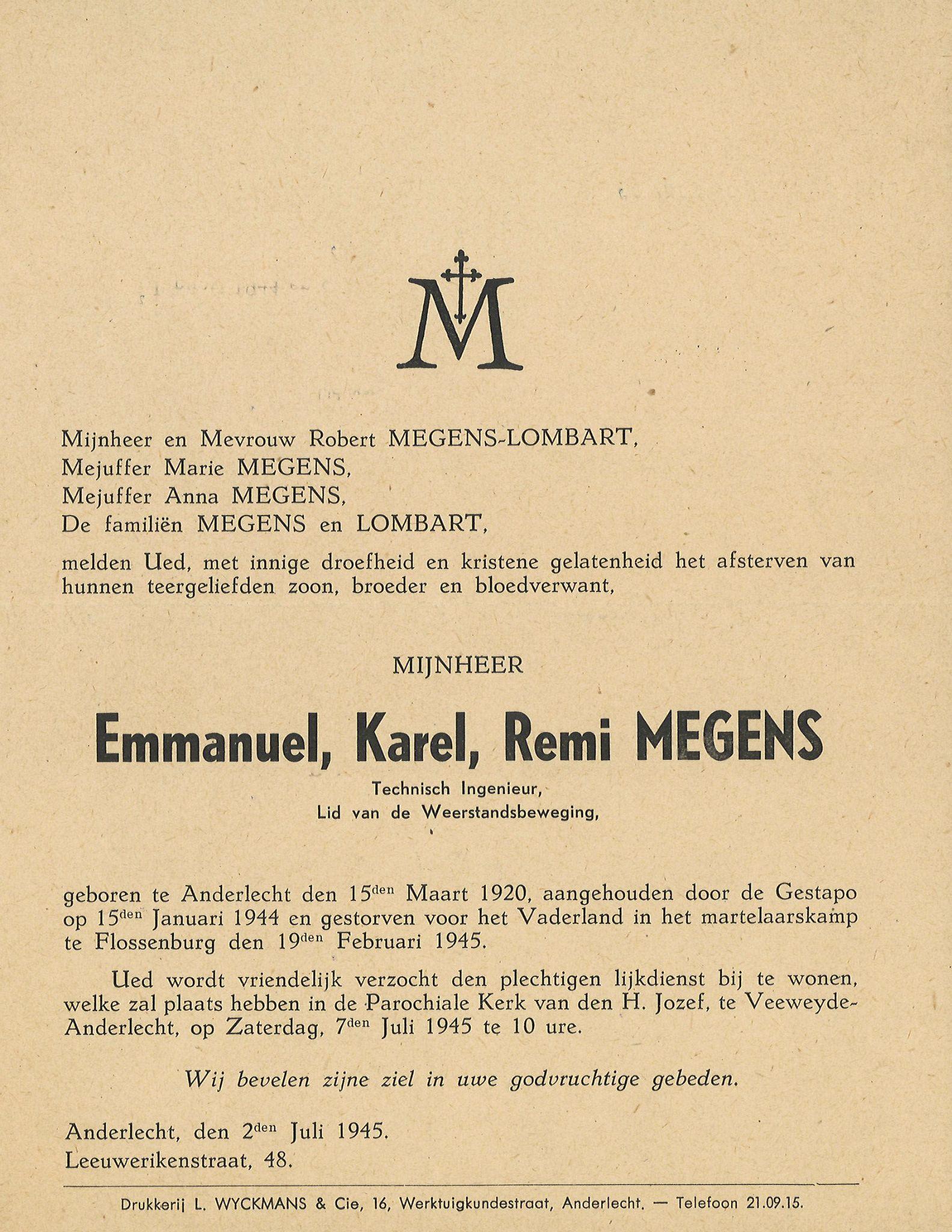
After my return home I went with a heavy heart to Emmanuel’s parents in rue des Alouettes, Anderlecht. The poor parents were shattered. We three wept—they with indescribable grief for their son’s death; I relived the scene of this murder whose memory never leaves me.
The father offered us coffee to calm our tears and sorrow.
Remember our dead! May this never happen again!
Many of our comrades begged to be executed to shorten their suffering. Others implored to be allowed to die—let alone those who swore, prayed, howled and went mad!
The calvary of these dying was that we had—not even a drop of water to offer these unfortunates!
I saw a completely deranged, feverish prisoner drink his own urine.
Change of situation!
Morale improves—hope returns to our hearts. Hundreds of planes pass overhead in successive waves for more than half an hour. What can they be seeking in this corner? Can they see us from above? The pilots surely saw our camp! The thick black cloud from the crematorium smoke must have been clearly visible!
How much longer can we hold out?
Nervousness spreads among our guards—a complete change comes over the Kapos’ attitude!
Evening roll-call takes place—but without counting detainees. No more shouting, no more blows!
The airmen had perhaps located the Messerschmitt factory. We hoped for a bombing!
No one gives orders any more. What disarray!
I have felt very unwell for several days. Will I live to see our liberators? I show symptoms of typhus. Lips dry, thirst devours me. Suddenly shivering and vomiting. My usually ravenous appetite falls to zero. Oedema swells my feet; I cough and sweat. I drag myself to the overcrowded infirmary. By chance they are removing a corpse. By miracle I have the strength to slip into the empty place. I am among the other dying…
Exanthematic typhus—also called petechial—an infectious disease resembling typhoid fever. Contagious from incubation through convalescence.
Even corpses can be contagious!
Among predisposing causes: fatigue, moral and physical suffering, contaminated food, confined prison air. Typhus causes terrible epidemics. It predominates in the cold season.
Infection is spread by lice, fleas and bedbugs.
Clothing, bedding and effects of typhus patients harbour contagion.
The patient is weary, suffers headache and often vertigo. Mortality varies with living conditions; in the camp 50–80 % was accepted.
General Mac Mahon defined typhus—from the Greek meaning torpor.
One generally dies of it—or becomes imbecile.
I felt unsteady and extremely weak.
I survived by a miracle! Around the tenth day I felt improvement—it seemed death was receding.
My infirmary neighbour also knew this favour or chance!
He was a true Belgian—Mr ADDONS, married to a woman from Opwijk.
How small the world is!
A total change had occurred during our stay in the infirmary.
The SS had evacuated the camp in disorder—taking 16,000 detainees on a forced march toward Dachau. The famous death march.
I found my friend Maurice in the infirmary—not knowing how he got there!
Staggering and wandering through the camp I discover a barrel of sauerkraut in an SS barrack. All prisoners remaining in camp thus had something to eat.
Certain of imminent deliverance we made a sign; we paraded limping, grouped by nationality. The red paint used by the Boches to mark corpses came in very handy.
“PRISONERS HAPPY END ! WELCOME !”#
We were liberated on Monday 23 April 1945 at 10:30 a.m.—two days before my birthday.
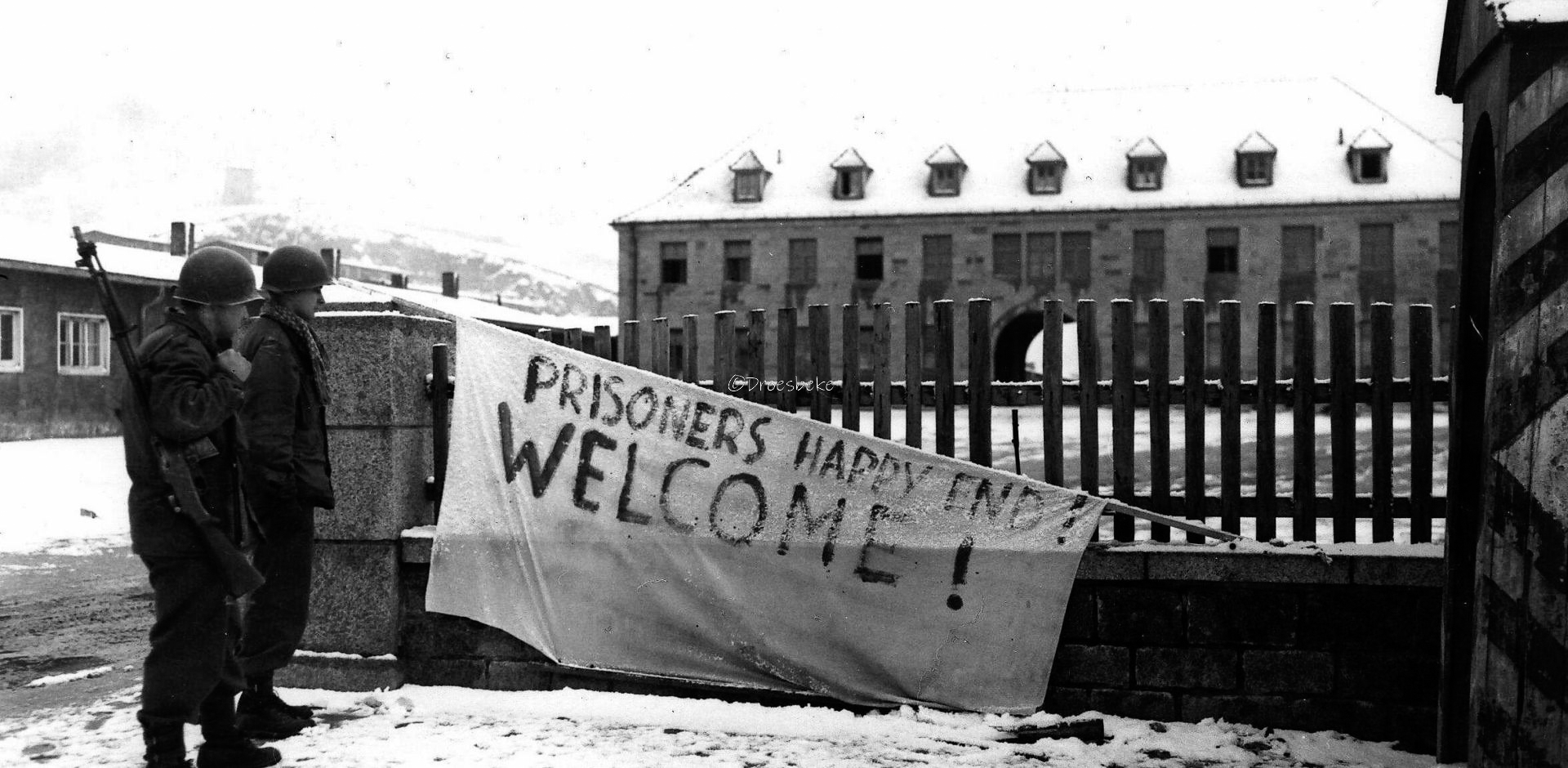
The first Americans to enter our camp were Major Bill Falvey James accompanied by a doctor and interpreter. If my memory is correct it was W. Campbell M.D. and William M.C. Connaley. They saved us. How can we ever thank them enough!
I warned the major we were contagious—typhus—quarantined and locked away to avoid spreading the scourge. He made us understand the Red Cross would take charge of us.
The Americans looked at us with pity—tears in their eyes. They threw pell-mell over the perimeter fence everything they carried—food, sweets, chocolate, cigarettes etc. There were fights among prisoners for possession of these marvels to which we were unaccustomed. They were starving and wanted to satisfy their hunger. Sad memory. They fought like madmen.
Our liberators were soldiers of the 538th Infantry Regiment, 90th US Division.
The following day—24 April 1945—a team of doctors and nurses arrived. Each typhus patient received a sodium salicylate injection; others were treated according to their illness. The sick numbered 1,526. The American investigation revealed: all very ill—180 acute typhus, 98 tuberculosis, 12 diphtheria, 2 malaria etc.
Food supplied by our liberators was abundant. Detainees overindulged and many could not tolerate it. The transition from total deprivation to plentiful abundance proved fatal for more than 200 sick.
We had to restrain ourselves—but hunger and thirst were atrocious.
We lived awaiting repatriation. A blue sky covered the camp; imposing calm reigned.
British intelligence and special operations personnel came to collect their captured agents—like us. Being part of this group I reached Belgium with them on 22 May 1945.
During our stop at Weiden Headquarters we were received by the American General Staff. For the little man from Merchtem that I was it was an unforgettable tribute. We were welcomed like princes! I arrived in Brussels by jeep after five days on the road. In Brussels I had the joy of meeting the first person from Merchtem since my arrest. Our former mayor Mr J. Van Ginderachter took the trouble to fetch me and bring me back to my Mother. It was magnificent. The people of Merchtem gave us an unexpected welcome. My calvary was ended!
What joy to live again! Do not seek to understand the reason. It is indescribable.
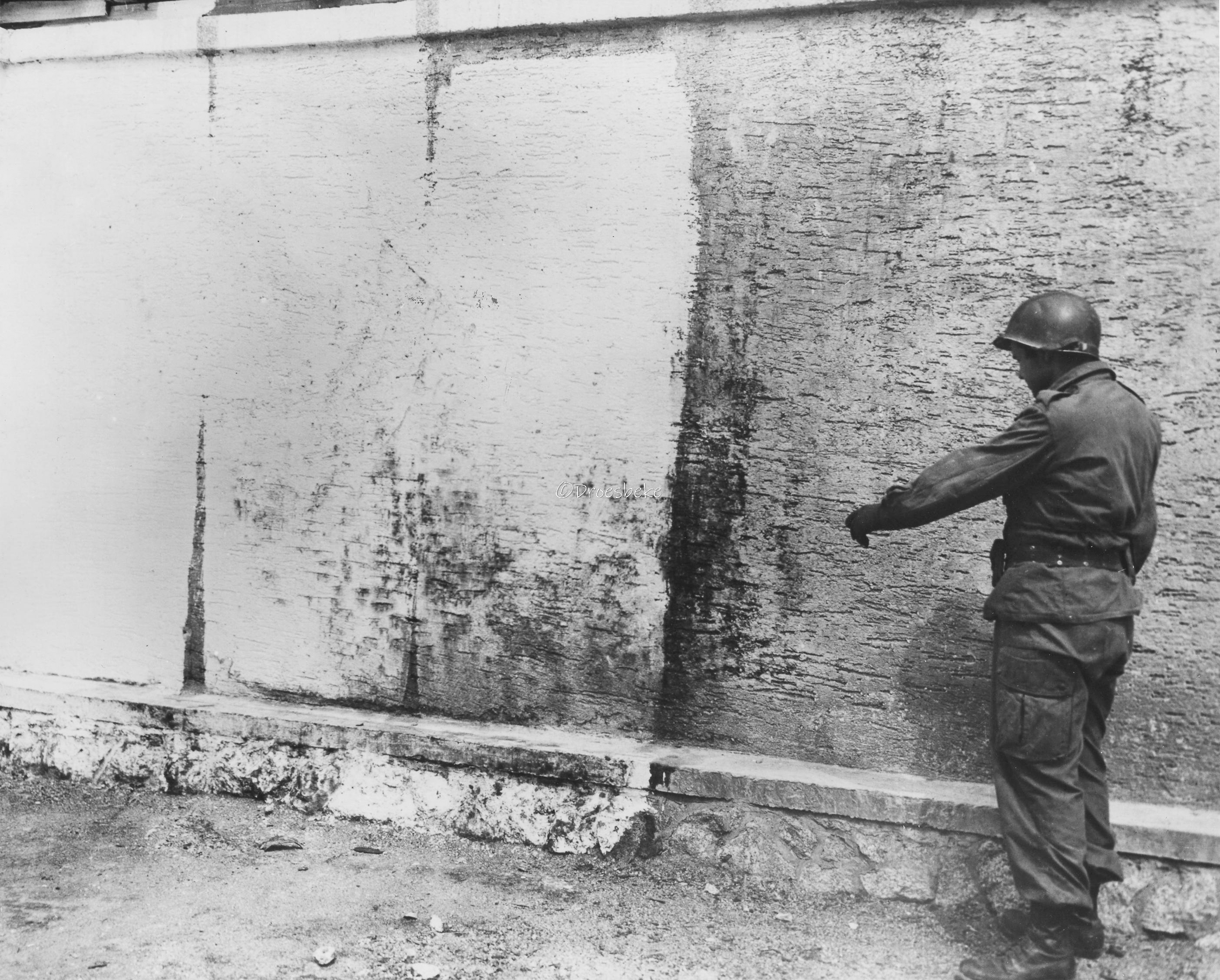
Shortly before their hasty departure the SS hurriedly whitewashed the blood-soaked wall. Many executions had taken place against this wall in the prison courtyard.
But let us go back a little to examine the SS evacuation of the camp.
Mr Emile LAUNOIS—former political prisoner interned at Flossenbürg—took part in the death march. He communicated the following information to me, supplemented by Messrs VOLMER and ANTONI.
19 April 1945 was a day like any other—except for the departure of all Jews from the camp. Why only the Jews?
According to some rumours all these poor Israelites were massacred the same day—barely outside the camp.
The SS stubbornly evacuated us—to take us further—but where? Americans advancing from the west, Russians from the east. Would we fall into Russian hands?
How would they treat us? A last look at the cursed camp and we are on the road—on foot. Barely a hundred metres along the path we see it strewn with corpses.
One would like to imagine these unfortunates trying to flee or escape. Alas no! At the end of their strength, unable to keep up, they were coldly shot by the SS. All stragglers received a bullet in the head and the march continued. Inhabitants had been ordered to bury these corpses on the spot. We had to walk on—overcome our weaknesses and follow the column—without rest, without food, without water—haunted by fear of being shot like dogs.
Dead lay all along the route. At nightfall we passed hundreds of corpses of those who had gone before us.
On 23 April 1945 we heard cannon fire; machine-gun noise drew nearer. An American reconnaissance plane flew over our column—guiding Patton’s troops in pursuit of the Nazis. Shooting and crackling everywhere. German civilians rushed to pillage the fleeing Wehrmacht remnants—soldiers escaping with whatever arms and baggage remained—or at least what was left. These fleeing soldiers seized any vehicle that could carry them away from one front only to throw themselves into the bear’s mouth. They were caught between two fires—in an inexorable pincer that would annihilate them. Just retribution.
The column—having lost its SS and guards—was free without realising it—but after paying with how many human lives! This march of indescribable horror cost about 7,000 dead.
According to Messrs VOLMER and ANTONI only one convoy reached Dachau—2,654 surviving deportees—but in what condition! The others were murdered en route.
The US Army had cut the road to Dachau; only a few days before German capitulation were these wretched prisoners liberated near Lake Chiemsee on 2 May 1945.
After this infamous death march 5,400 unidentifiable corpses were found along the route in April–May 1945.
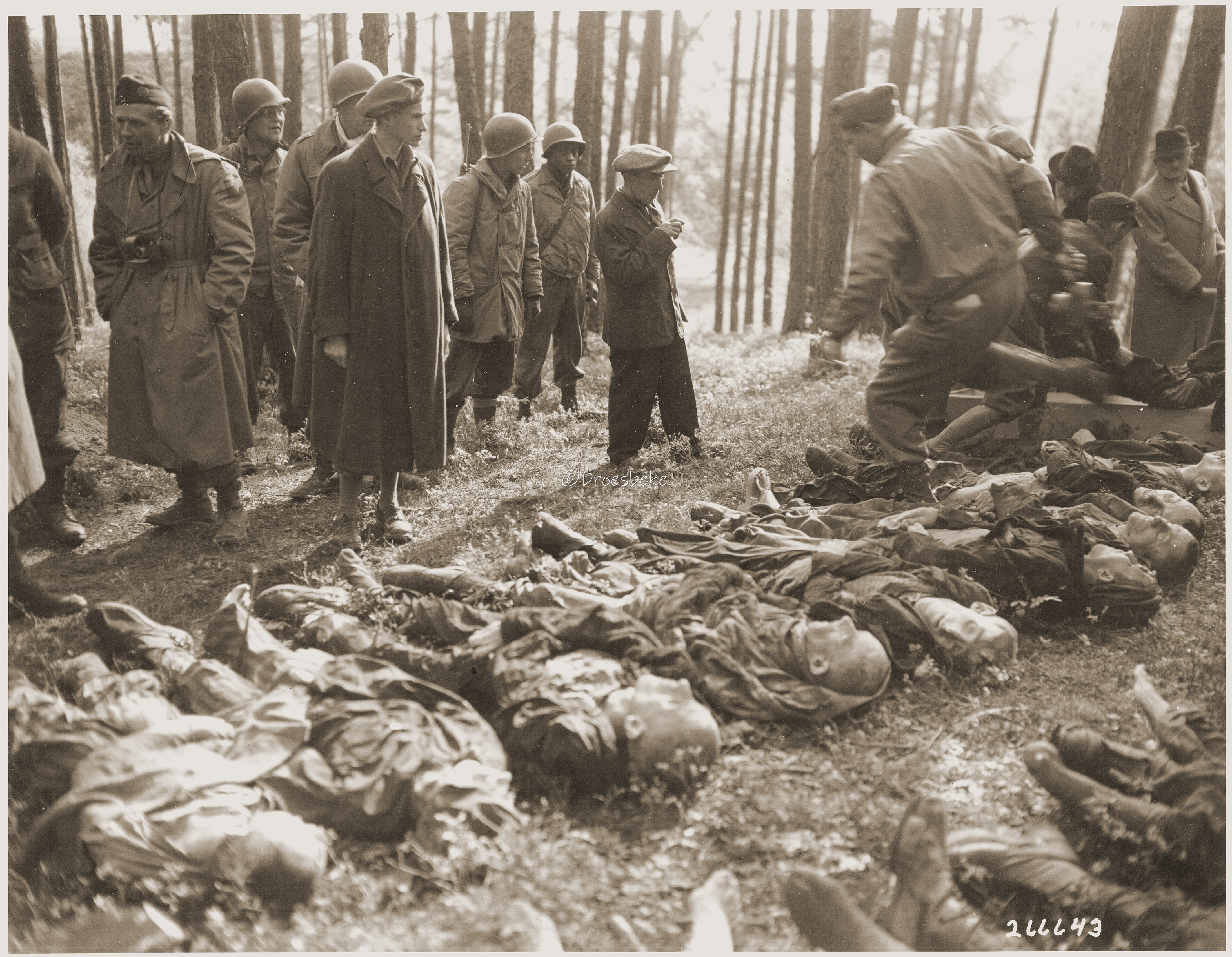
The inscription later placed on the Flossenbürg crematorium chimney estimates total deaths at over 73,000; 296 more died after the Americans arrived.
In a register of proceedings it is noted that the committee formed at liberation could not establish the exact number of dead.
After this appalling odyssey, these terrifying facts, this terrible history, this apocalyptic war—despite rancour, misery, offences suffered, resentments, pain and torture endured—it falls to us to forgive but also to remember—so future generations never endure the same calvaries nor know such methods of exterminating peoples who thought differently from the masters of the moment.
It remains essential to set an example and ensure such facts never recur—that the true guilty parties, leaders and executors who originated these tortures are punished as they deserve. That they enjoy no freedom of body or mind. Courts must be merciless in their judgments so no guilty one slips through the net of justice.
For we knew the outrageous attitude of our torturers at their Nuremberg trial. Alas—too many guilty fled abroad or melted into the mass of their fellow citizens. It must be recalled that during the rise of Nazism the great majority of Greater Reich inhabitants believed in their Führer and swore only by him.
I appeal to my contemporaries—from the humblest citizen to the highest authorities directing our country—to please remember.
Indifference and ignorance from those around us wound the unfortunates who endured this calvary.
Our glorious dead teach us that something exists more precious than life.
It is FREEDOM—which is the foundation of happiness, which shows us the path of courage, self-sacrifice and honour.
Those who wore the striped pyjama with the red political triangle will never forget.
Before the last witnesses fall silent forever, what is needed is not merely a narrative—but a lesson.
C.J. Droesbeke.
Reply by Email